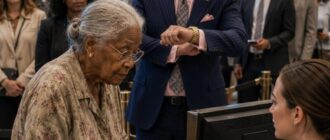
When the doctor told us our mother could no longer live on her own, my six siblings suddenly found reasons to step back.
No one expected me to say anything—I had never been her favorite—but what I said next changed everything.
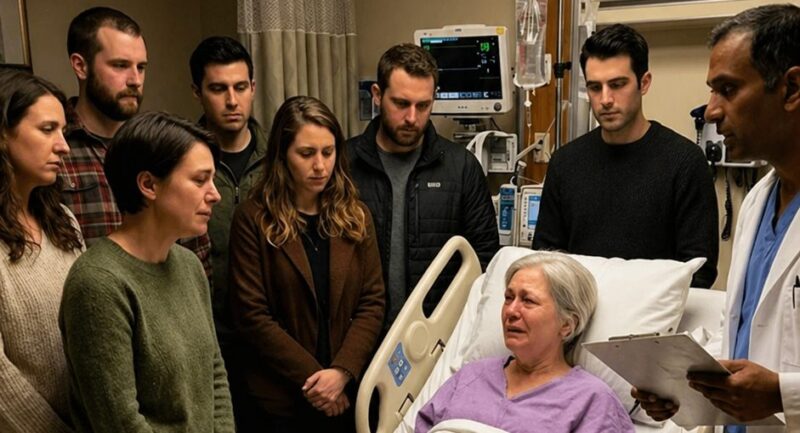
The doctor explained that our mother, Margaret, had already suffered two serious falls and that living alone was no longer safe.
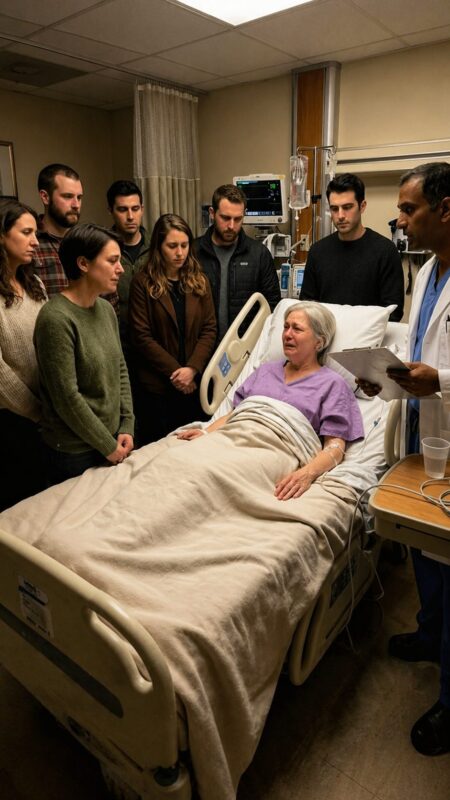
Silence filled the room. She sat on the hospital bed with a fragile, hopeful smile, still believing that one of her children would step forward.
But one by one, they refused.
Jack blamed the mortgage. Eliza said she was about to move away. Nick worried he would lose his job. Kirk insisted his wife wouldn’t agree.
Nancy claimed her home was too small. Sam offered to “visit on weekends.”
Excuse after excuse.
I watched as our mother’s smile slowly faded, the truth reaching her before the tears did.
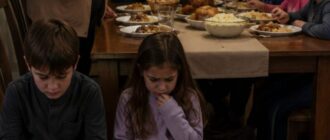
This was the same woman who had raised seven children largely on her own after our father left.
She worked night shifts, stretched every dollar, and held everything together. Yet growing up, I had always felt distant from her.
As the youngest—the unexpected seventh child—I wore hand-me-down clothes and carried the quiet sense that I was never her favorite.
But seeing her like that, something inside me shifted.
“I’ll take Mom in,” I said.
Everyone turned, surprised.
“But only if we sell the house.”
The relief in the room instantly turned into tension. My siblings protested loudly. The house was the only valuable asset we had left.
I stayed calm. “We’ll discuss it tomorrow. At the house.”
Later, sitting alone in my car, I understood the truth—they weren’t just avoiding responsibility. They were protecting what they believed was their inheritance.
The next day, I arrived early. My mother was resting in the kitchen.
As I prepared something to eat, I finally asked the question that had lingered for years: why had she always kept her distance from me?
She hesitated, then told me the truth.
She reminded me of the moment my father left—the fear, the bills, the uncertainty. Keeping her distance, she said, had been her way of protecting herself from more pain.
It wasn’t rejection. It was survival.
That realization changed something inside me. I hadn’t been unloved—just loved cautiously.
When my siblings arrived, the argument began immediately.
They refused to sell. I laid out the facts: the house was unsafe, none of them were willing to step up, and something had to change.
To my surprise, our mother supported me.
Then more truth surfaced. Nancy admitted that Mom had shown signs of confusion before—forgetting things, behaving unpredictably.
One by one, the others confessed their worries and uncertainty. No one had truly understood what was happening.
I insisted we sell the house to pay for proper care. They resisted, but they had no better solution.
I contacted a real estate agent, Linda, who quickly listed the property. At the same time, I sought a second medical opinion from Dr. Harris, suspecting something had been overlooked.
Within days, the house was sold. The money was divided, but I made sure a significant portion was reserved for our mother’s care.
Then came the appointment with Dr. Harris.
After reviewing her records, he revealed something unexpected: her condition wasn’t as serious as we had believed.
Much of her confusion was caused by incorrect medication use—wrong dosages, overlapping prescriptions, and poor timing.
With proper adjustments, her condition could improve.
Relief washed over me.
Soon after, my mother moved in with me. Within days of correcting her treatment, she became more alert and present. The change was unmistakable.
Gradually, my siblings began to show up. Sam brought groceries. Nick repaired things around the apartment. Eliza called regularly. Even Jack started visiting.
Living together wasn’t easy, but we found our rhythm.
One evening, my mother said quietly, “I didn’t expect it to be you.”
“Neither did I,” I replied.
She apologized softly. I understood.
For the first time, I no longer felt overlooked or distant.
I felt seen.
Not perfect. Not erased.
But finally understood.