The morning after discovering Darla’s hidden plans, I met Frances Keene, the attorney who had helped my daughter and her husband, Paul, purchase Bellweather Farm.
Frances explained that Darla had secretly bought and restored the property because it had once belonged to our family.
Then she gave me unexpected news: the children and I were financially secure.
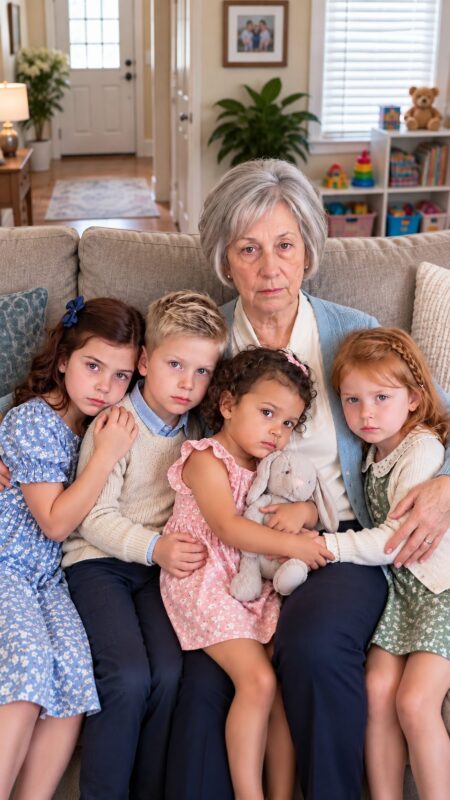
A missing document had delayed my access to the family trust, forcing me to struggle unnecessarily for six months.
The trust could cover our home, the children’s expenses and education, and provide me with a caregiver stipend.
But the greatest revelation was a letter written decades earlier by my father.
For years, I had believed he lost part of Bellweather through poor financial decisions.
His letter revealed the truth: he had sold the north orchard to pay my mother’s medical bills.
He had allowed her—and eventually me—to blame him because he did not want her to feel responsible.
“Family land is only land,” he had written. “I would sell every tree again if it meant keeping your mother alive one more year.”
Darla had discovered the letter years earlier but had been afraid to show me. In her own letter, she apologized and explained why she and Paul bought Bellweather.
“Please don’t turn Bellweather into a monument to us,” she wrote. “Use it.
Change it. And if keeping it ever becomes wrong for you, sell it without guilt. The point was never the farm. The point was choice.”
Gradually, Bellweather became part of our lives. Lily read on the porch, Ben helped with repairs, Molly collected stones, and Rosie named the apple trees.
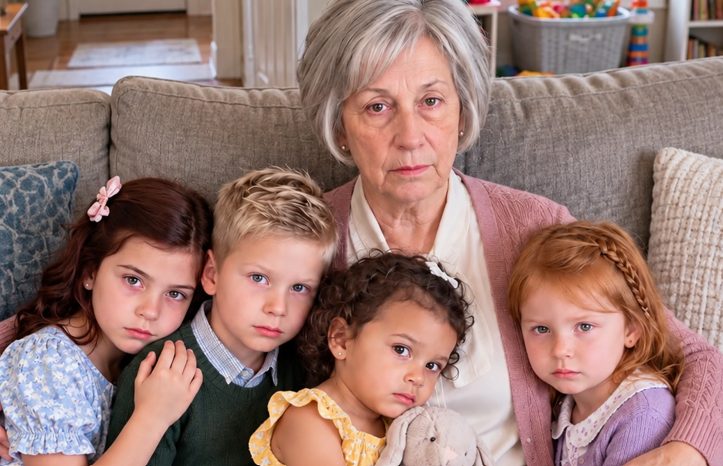
Almost a year later, Frances discovered another unfinished project among Darla’s papers:
the Bellweather Saturdays Project, a nonprofit offering free gardening, reading, cooking, and practical-skills workshops for children.
Attached to the application was an old school assignment I had written when I was sixteen:
What I Would Do If Bellweather Were Mine Someday.
I had written that I would keep the orchard, let children pick apples, teach people to grow things, create a room filled with books, and make sure nobody felt ashamed if they could not pay.
At the bottom was one sentence:
A home is best when more people are glad it exists.
Darla had found the forgotten page and built her project around my childhood dream. Behind it, she had left seven words:
Mom, will you finish what we started?
So I did.
Bellweather Saturdays began with twelve children. Soon there were eighteen, then twenty-five.
Teachers volunteered, books were donated, and the old barn became an activity space.
Bellweather was no longer something from my past. It was alive.
Two years after the accident, more than a hundred people gathered there and unveiled a sign:
THE BELLWEATHER HOUSE
Beneath it were my sixteen-year-old words: A home is best when more people are glad it exists.
Three weeks later, one final package arrived. Inside was a memory card containing a video Darla and Paul had recorded days before their final trip.
Darla looked into the camera.
“Hi, Mom.”
She told me that I had always considered her brave, but she had learned courage from me.
She remembered me working late and still reading to her, making meals when money was scarce,
sitting beside her when she was frightened, and teaching her that courage did not mean being unafraid.
Then Paul spoke.
“Thank you for raising the woman I got to love.”
Finally, their four children ran into the video, younger and laughing.
“We love you, Grandma!” they shouted.
Watching them, I understood something.
Grief was not teaching me how to live without Darla. It was teaching me how to carry her forward without demanding that the past return.
Bellweather eventually became a year-round program. I never renamed it after Darla because she had never wanted a monument.
She wanted something living.
Darla had not really left me a farm, money, or instructions.
She had left me a choice.
At seventy-two, surrounded by my grandchildren and a house filled with people who were glad it existed, I finally understood:
My story had not ended when my daughter’s did.
Somehow, she had helped me begin again.