I Agreed to Marry a Prisoner for Financial Survival—Three Years Later, He Walked Free and Uncovered a Secret That Changed Everything
I married Jonah while he was serving a twelve-year prison sentence in exchange for $2,000 a month. Back then, I convinced myself it wasn’t about feelings or romance—it was about survival.
At twenty-seven, I was struggling to raise my younger brother, Owen, on my own. Rent was overdue, bills kept piling up, and every month felt like a battle just to stay above water.
So when a wealthy woman named Celeste approached me with an unusual offer, I listened.
Her proposal was straightforward: marry her imprisoned son, visit him regularly, write letters, and help demonstrate to the courts that he still had family support.
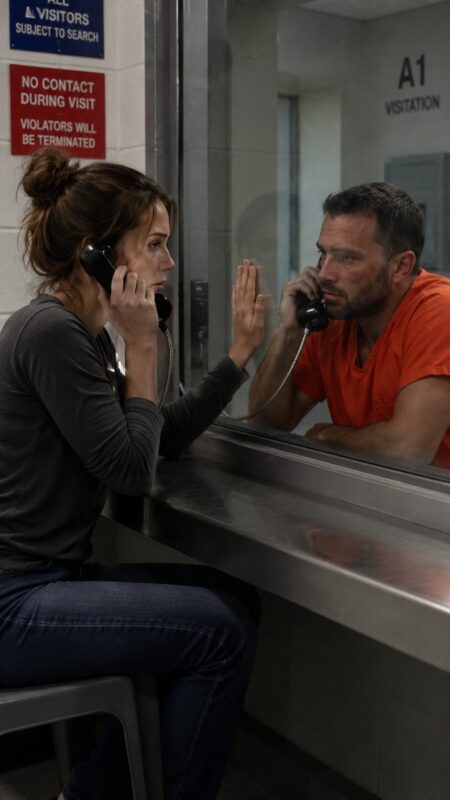
Every instinct told me to walk away.
Instead, I thought about Owen and accepted.
When I told him, he was furious.
«You traded your future to save us?» he demanded.
«I did what I had to do,» I replied.
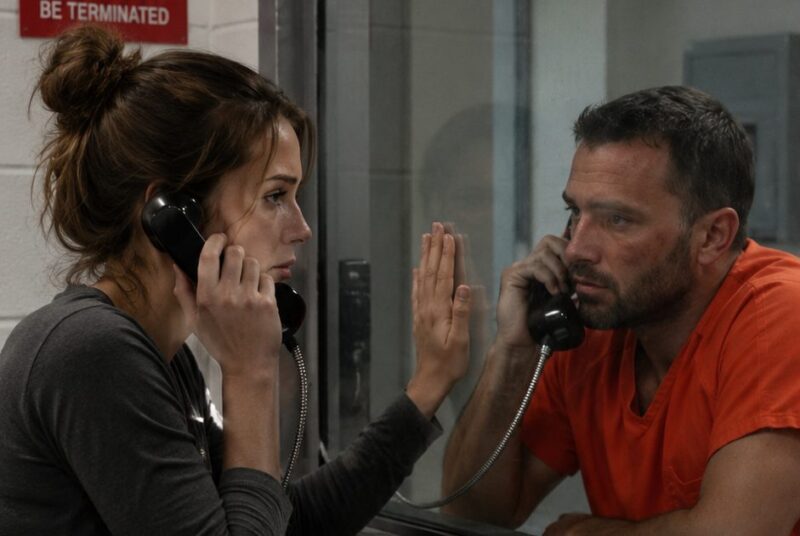
The wedding took place in a prison visitation room, separated by thick glass and watched over by correctional officers.
Jonah wasn’t what I expected.
He wasn’t bitter or arrogant.
He was deeply ashamed.
He admitted that years earlier he had improperly taken $18,000 from a foundation account. But he insisted he wasn’t responsible for the missing $600,000 that had destroyed his reputation.
According to him, his cousin Dean had manipulated records, forged documents, and shifted the blame onto him.
At the beginning, I didn’t care whether he was telling the truth.
I was there because I needed the money.
But as the months passed, things changed.
I continued visiting because Celeste’s checks arrived on schedule. Jonah continued writing letters filled with sketches, thoughtful questions, and genuine concern for Owen and me. He remembered details that most people would forget.
Little by little, he stopped feeling like a business arrangement.
One evening after work, I reviewed his case file again. Something immediately stood out. A transfer authorization supposedly signed by Jonah carried a date from a period when he was already in custody.
Owen noticed it too.
Together, we began assembling a timeline. Our apartment wall soon disappeared behind sticky notes, photocopies, financial statements, signatures, and dates. Every road seemed to lead back to Dean.
I eventually took the evidence to a legal-aid attorney.
«He admitted taking some of the money,» she pointed out.
«I’m not asking you to prove he’s innocent,» I said. «I’m asking you to prove someone made him look far guiltier than he actually was.»
For three years, Owen and I fought to uncover the truth. We spent endless hours gathering records, attending hearings, and persuading people to take another look at the evidence.
At one point, even Jonah asked me to stop.
«You’re wasting your life on this,» he told me.
«It’s my life,» I replied. «I’ll decide how to spend it.»
That was the moment I realized I loved him.
Not because he was flawless.
Because he was trying to become a better man.
Eventually, investigators uncovered forged documents and missing records connected to Dean.
Jonah’s conviction for the major theft was overturned. Although he still had to repay money tied to his own misconduct, he was no longer viewed as the mastermind everyone believed him to be.
When he was released, he came home with me.
For one week, we attempted to build the ordinary life we’d both dreamed about.
Then everything changed.
One evening, Jonah placed a black box on our kitchen table.
Inside was an old notebook belonging to Celeste.
As I turned the pages, my stomach tightened.
Years before arranging our marriage, she had investigated me.
No parental support.
Responsible for younger brother.
Financially vulnerable.
Likely cooperative if compensation remains stable.
Every weakness in my life had been documented.
She hadn’t chosen me because she trusted me.
She had chosen me because she believed poverty would make me easy to control.
Beneath the notebook were legal trust documents naming me as co-trustee of a substantial family trust.
Finally, Jonah told me the truth.
His late father had established safeguards preventing Celeste and Dean from gaining complete control over certain family assets.
If Jonah’s conviction were ever overturned, his legal spouse would automatically receive authority within the trust structure.
Celeste had intentionally selected someone she believed she could manipulate.
What hurt even more was discovering that Jonah had learned part of this months earlier and kept it from me.
I felt completely betrayed.
«I chose to love you,» I told him. «And you let me live in ignorance.»
I asked him to leave.
The very next day, Celeste offered me $100,000 to resign as trustee and disappear from the situation.
I refused.
Several weeks later, during a donor luncheon organized by her foundation, I publicly revealed everything.
I presented the notebook.
I exposed the trust arrangement.
I shared evidence linking Dean to the fraud.
The room exploded with shock.
Board members immediately voted to suspend Celeste and launch a formal investigation.
The woman who believed she could control every outcome had made one critical mistake.
She had underestimated me.
Months later, Dean faced criminal charges. Celeste lost her leadership position, and the foundation was placed under intensive review.
Jonah completed his restitution obligations and slowly began rebuilding the trust he had broken.
One evening, he found me reviewing scholarship applications.
«I should have trusted you from the beginning,» he said quietly.
«Yes,» I answered.
«I’m sorry.»
«I know.»
Forgiveness didn’t happen overnight.
The first time I married Jonah, fear made the decision for me.
The second time, I chose him freely—because I finally stood at the center of my own life and no longer belonged to anyone else’s plans.