Our daughter, June, was four months old when her temperature reached 104 degrees.
I’m Rachel Donnelly, a nurse practitioner who had spent six years in emergency medicine.
My work taught me to remain calm when everyone else was frightened.
I had also learned endurance while caring for my mother, who developed early-onset Parkinson’s disease at fifty-eight.
My husband, Ethan, was intelligent, thoughtful, and loving, but he had always been protected from discomfort by his mother, Sylvia.
Her world revolved around her only son. When I miscarried our first pregnancy, she called Ethan every day to comfort him but never called me.
I stayed silent, believing I was protecting our marriage. Later, I understood that avoiding conflict only allowed the problem to grow.
After June was born, Ethan was an attentive father for six weeks.
Then a major product launch consumed his time. When I came home exhausted, I still cared for June, managed the house, and helped my mother.
When Ethan was tired, however, he acted as though his responsibilities had ended.
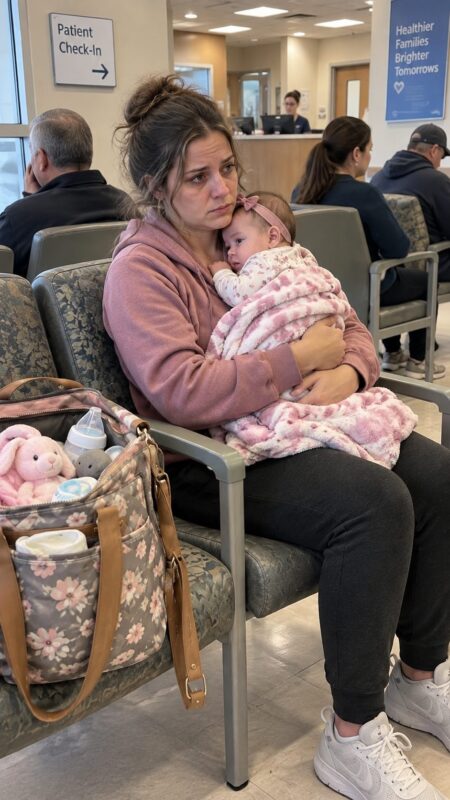
One Thursday, June developed a fever. It rose steadily until, at one in the morning, the thermometer read 104.1.
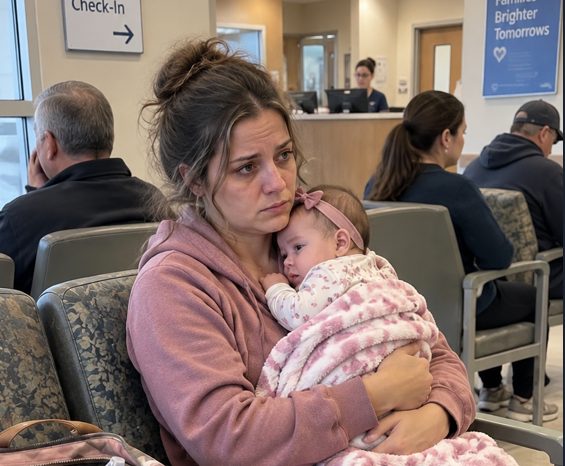
Her pediatrician told us to go directly to the emergency room. By two, June was crying desperately in my arms while Ethan paced the waiting area.
He complained that he had an important presentation at nine and was exhausted. Then he stepped away with his phone.
Twenty minutes later, Sylvia entered, picked up Ethan’s coat, and announced that she was taking him home so he could sleep.
When I reminded her that our baby was dangerously ill, she replied, “You’re her mother. Figure it out. He didn’t sign up for this much stress.”
I looked at Ethan, standing silently with his coat, waiting for someone else to make the decision.
Suddenly, I saw the pattern clearly: whenever life became difficult, he waited for another person—usually a woman—to assume responsibility.
Calmly, I told him that June deserved both parents.
He had promised to be there for her, yet he had called his mother to rescue him because he was tired.
I ordered Sylvia to sit down or go home, then told Ethan he would remain through the examination, any admission process, and all medical instructions.
His presentation could be rescheduled; his sick daughter was the only priority that mattered.
I also confronted Sylvia. Her love had repeatedly shielded Ethan from discomfort and taught him that his needs came first.
She insisted she was helping, but Ethan finally interrupted. He admitted that I was right: he had called because he wanted to escape, not because he needed help.
For months, he had used work and fatigue as excuses while I carried nearly everything.
Ethan told Sylvia he needed to learn how to stay when life was hard. He asked her to go home, saying, “I love you, but I need to stay here with my family.”
Before leaving, Sylvia quietly apologized to me.
Ethan sat beside me, placed a hand on June’s back, and promised to stay—not only that night, but every night we needed him.
At 3:47 a.m., Dr. Owens examined June and diagnosed a urinary tract infection.
She started antibiotics and explained what symptoms to monitor.
Ethan listened carefully and asked useful questions. By the time we left, June’s fever had fallen to 101.3.
At home, Ethan called his boss and said he had a family emergency.
The presentation was simply rescheduled. He monitored June, gave her medicine, and let me sleep for four hours.
Later, he offered to drive my mother to appointments, take Sunday afternoons, and genuinely split nighttime care.
That morning, as June slept peacefully beside us, Ethan admitted he had always chosen comfort over responsibility.
I told him I had made him stay because I still believed in the man who had cried while holding his newborn daughter.
He thanked me and promised to become someone who stayed without being forced.
As morning light filled the room, nothing dramatic had changed—yet somehow, everything had.