After I dropped my wife at the airport for what she described as a five-day wellness retreat, I was about to head home when my twelve-year-old granddaughter, Sophie, leaned forward from the back seat and whispered, “Grandpa… we can’t go home.” Then, in a trembling voice, she added, “I heard Grandma talking about money… and about making it look natural.”
We didn’t drive home. We hid instead. Twenty minutes later, everything I thought I knew began to fall apart.
Sophie’s face was drained of color, her hands shaking uncontrollably. When I asked what was wrong, she told me she had overheard my wife, Margaret, on the phone the night before. According to Sophie,
Margaret spoke about money and said that once I was gone, everything would belong to her. She had even promised she would “make it look natural”—and then laughed. Sophie was convinced my wife intended to harm me.

At first, I tried to dismiss it as a misunderstanding. Margaret and I had been married for thirty-five years. But as Sophie continued, details I had brushed aside suddenly returned with unsettling clarity. Margaret had recently asked unusual questions about my life insurance,
urged me to simplify my will, and insisted I take new vitamins that left me dizzy, nauseated, and weak. Even the so-called retreat felt suspicious—she had never shown any interest in spas or wellness programs before, yet now she was flying off for nearly a week.
I believed Sophie—not necessarily every conclusion, but certainly her fear.
Instead of going home, I pulled into a gas station parking lot and called Marcus Chen, a private investigator whose contact information my late father had once given me. After listening carefully, Marcus agreed to look into it immediately.
Not long after, he called back with alarming news. Margaret had checked in at the airport—but never boarded her flight. Instead, she exited through a service door and checked into a hotel in Vancouver under her maiden name. She wasn’t alone. When Marcus sent me a photo, my stomach dropped. The man with her was my doctor—Dr. Andrew Prescott.
Marcus dug deeper and uncovered a troubling background: past fraud investigations and questionable prescribing habits. Suddenly, my symptoms didn’t seem like stress or aging anymore. They looked deliberate—like I had been slowly poisoned. Marcus urged me to go straight to the police, but I needed to hear the truth for myself.
Before taking any further steps, I brought Sophie to my daughter, Catherine, at the hospital. Catherine, a surgeon, listened to everything and came to a conclusion far more quickly than I had. She told me plainly that Margaret had likely been poisoning me.
I then went to the hotel.
Standing outside Margaret’s room, I heard everything I needed to hear. She laughed about how “the old fool” believed she was at a spa. She and Prescott discussed my life insurance, my assets, and the pills they were using to weaken my heart gradually so that my death would appear natural. Prescott even named the drug: digoxin.
That was enough.
Marcus contacted the authorities, and Detective Sarah Morrison took over the case. With recordings, financial evidence, and the pills as proof, the police devised a plan. I would return home, act as if nothing was wrong, and pretend to take whatever Margaret gave me while they monitored the situation closely.
When Margaret came home earlier than expected, she played the role of the caring wife perfectly—bringing me soup, blankets, and medication, all wrapped in gentle concern. But each dose was another attempt on my life.
I pretended to take the pills while secretly saving them as evidence. Hidden cameras and microphones documented everything. One night, she called Prescott and calmly said she was doubling the dosage and expected to be a widow by Monday.

That was the final piece.
At dawn, the police arrested Margaret in our kitchen. Prescott was taken into custody shortly afterward. The evidence was overwhelming: recordings, financial transactions, toxicology reports, prescription histories, and their own words outlining the plan.
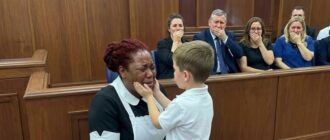
During the trial, Margaret tried to appear innocent, but the recordings told a different story. Sophie also testified, bravely recounting what she had heard. The jury found both Margaret and Prescott guilty. Margaret received a life sentence, while Prescott was sentenced to many years in prison and permanently lost his medical license.
The hardest part came after the verdict.
I had to accept that the woman I had trusted for decades had been planning my death. My body had been slowly weakened, my health deliberately sabotaged—and if Sophie had stayed silent, I might never have known why.
Recovery took time. Sophie needed therapy, and so did I. Catherine helped restore my financial and legal safeguards, and together we made our home feel safe again. In time, I began speaking publicly about elder abuse and medical exploitation.
But what stayed with me most was not just the betrayal—it was the lesson.
When a child says they are afraid, listen.
Sophie’s quiet voice from the back seat saved my life.
In the end, it was the smallest voice that ensured I would live to return home.