I Returned to the Mansion I Bought for My Daughter—And Found Her Scrubbing the Floors
For fifteen years, I built my life across the ocean.
London became my battleground—endless negotiations, sleepless nights, and relentless pressure that transformed a struggling startup into a multimillion-dollar logistics company.
Every achievement was tied to a promise I had made long ago—to my daughter, Lily Carter.
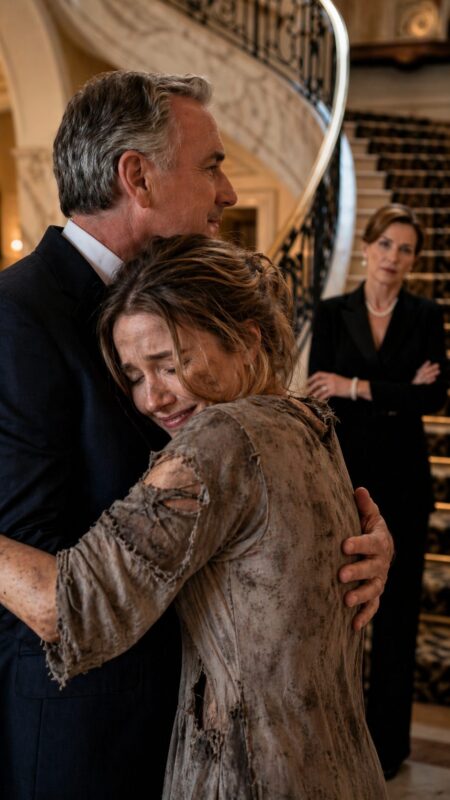
When I left the United States, Lily was just ten. I still remember her small hands gripping my jacket, holding on as if letting go might make me disappear.
“I’ll come back soon, Dad,” she said.
“And when I do,” I promised, “everything will be ready for you.”
Before leaving, I secured her future. I bought her a home—a four-million-dollar estate in Savannah, Georgia.
The property was placed entirely in her name. But she was too young to live there alone, so I entrusted her care to my younger sister, Diane.
For fifteen years, I sent money without fail—tuition, living expenses, maintenance, and anything Lily might need.
Diane always reassured me that everything was fine. Lily sounded distant during our calls, but I trusted Diane when she said, “She’s just busy.”
Until the day I came back.
I didn’t tell anyone. After closing a major deal, I left everything behind and flew home. Savannah looked unchanged—like a memory waiting quietly for my return.
When I arrived at the estate, it was flawless: manicured gardens, polished walls, everything exactly as I had left it.
For a brief moment, I felt relief.
Then I stepped inside.
The house was luxurious—but lifeless. The silence felt wrong. Then I heard it—a slow, scraping sound. I followed it toward the staircase.
A young woman was kneeling on the marble floor, scrubbing it with a rag.
At first, I assumed she was a housekeeper.
“Excuse me,” I said.
She looked up.
And everything inside me froze.
It was Lily.
Her face was thinner, her eyes hollow. Her hands were red and worn, her arms marked with bruises. She stared at me as if I weren’t real.
“Dad?” she whispered.
I struggled to find my voice. “Lily…?”
Before I could say anything more, footsteps approached. Diane appeared, dressed in silk, holding a glass of wine.
“Adrian! What a surprise,” she said with a smile that never reached her eyes.
I didn’t return it.
“Why is she cleaning?” I asked.
“Oh, just chores,” Diane replied casually. “It builds character.”
I looked back at Lily. She immediately lowered her gaze—like she expected punishment.
“In her own house?” I asked quietly.
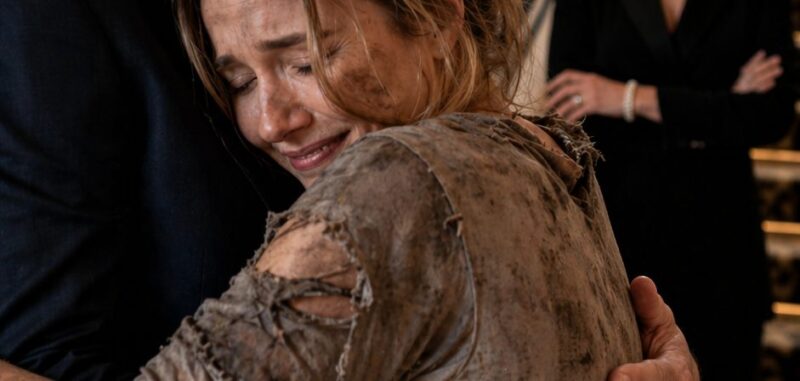
A cold weight settled in my chest.
I told Lily to stand. She hesitated—waiting for Diane’s reaction. That hesitation told me everything I needed to know.
Diane’s tone sharpened. “You’ve been gone for fifteen years,” she said. “I raised her. She has everything she needs.”
But Lily flinched at her voice.
That was enough.
I called my lawyer. “Begin a full audit,” I said.
Within twenty minutes, Thomas Whitford arrived. He reviewed fifteen years of financial records. What he uncovered was worse than I imagined.
More than three million dollars had been funneled into accounts under Diane’s name.
“You’re overreacting,” Diane snapped. “Maintaining this house is expensive.”
“I already paid for it,” I replied.
Then Lily spoke.
“I wasn’t allowed in half the rooms,” she said quietly. “She rented them out. I had to clean up after parties… sometimes until morning.”
Diane tried to interrupt, but Lily continued.
“She said if I complained, you’d send me away.”
Thomas uncovered forged signatures—documents signed in Lily’s name.
“I didn’t sign those,” Lily said.
“We know,” he answered.
Minutes later, the police arrived.
Diane shouted, protested, tried to shift the blame—but it was over. She was escorted out of the house she had controlled for fifteen years.
Silence returned.
Lily sank down, trembling. I sat beside her.
“It’s over,” I said gently.
She looked at me, uncertain. “Am I in trouble?”
“No,” I said immediately. “You did nothing wrong.”
That night, she showed me everything—the small room she had lived in, the cleaning supplies, the parts of the house she was never allowed to enter.
Then she apologized.
“I’m sorry I didn’t keep the house perfect,” she said softly.
I stopped her.
“You don’t apologize for surviving.”
Later, we sat outside as the sun set behind the magnolia trees.
“I thought you forgot me,” she whispered.
I put my arm around her.
“Never,” I said quietly. “And I’ll spend the rest of my life proving it.”