My Daughter Never Came Home After Prom. Eleven Months Later, I Found Something Hidden Inside My Son’s Beanbag Chair That Changed Everything.
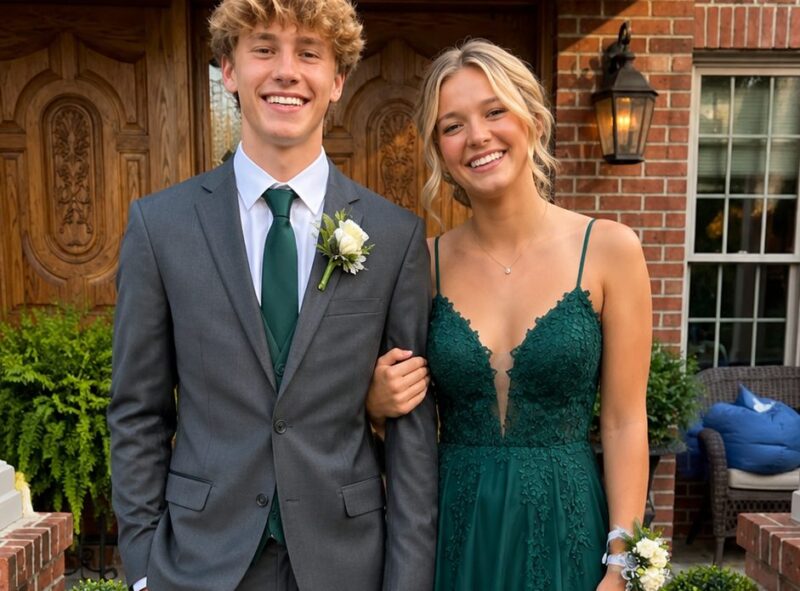
The last photograph I ever took of my daughter showed her standing on our front porch in a pale blue prom dress, smiling beside her twin brother. Before they left, I gave them the same reminder I always did.
“Stay together tonight.”
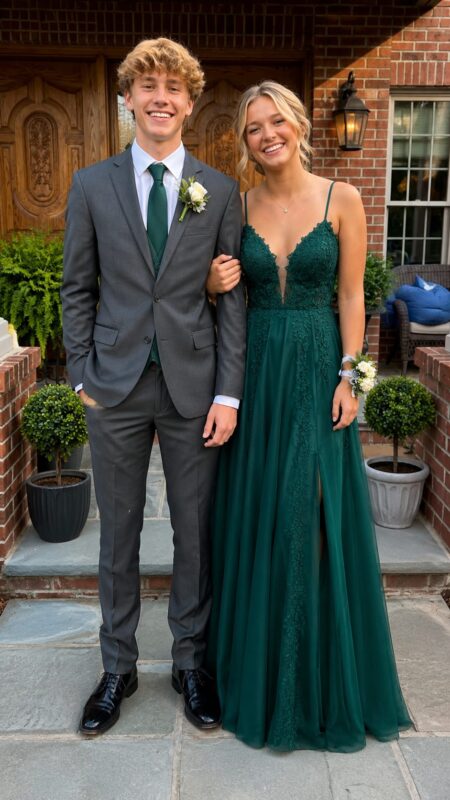
“We always do,” Liam replied with a smile.
Those were the last words I ever heard from Livia.
Just before midnight, the phone rang.
It was the school principal.
His voice was unsteady.
“Your daughter is missing. Please come to the school immediately.”
She never came home.
The police searched everywhere—the school grounds, the woods behind campus, and the nearby river. Every possible lead was investigated. Detectives questioned students, teachers, and parents. Again and again, they asked Liam the same question.
“Where did she go?”
“I don’t know,” he answered every time. “She stepped outside for some fresh air. I thought she’d come right back.”
After that night, Liam was never the same.
He became quiet.
He locked himself in his room.
He pushed everyone away.
I believed grief had consumed him, so I respected his privacy.
For eleven months.
Then, while he was away at college, I smelled smoke drifting from beneath his bedroom door.
Terrified, I forced the door open.
There was no fire.
Only silence.
I sat down on the old yellow beanbag chair we’d given him years earlier.
Immediately, something felt strange.
One side was unusually firm.
The other felt almost empty.
I turned it over and noticed a line of fresh red stitching running across the bottom.
Liam had never sewn anything.
Livia had.
My hands shook as I carefully pulled the thread loose.
The seam opened.
Inside lay her pale blue prom dress.
Then came dozens of sealed letters addressed to Liam.
Photographs.
A courthouse wedding picture.
A sonogram.
A hospital bracelet.
And finally, a tiny photograph of a newborn wrapped in a yellow blanket.
An envelope slipped onto the floor beside me.
On the front, in Livia’s unmistakable handwriting, were the words:
Mom—Only If You’re Ready to Listen.
I screamed.
When my husband, John, rushed into the room, I was surrounded by letters.
“She wasn’t kidnapped,” I whispered.
He picked up the courthouse photograph.
“She married Mitchell?”
I nodded through my tears.
The letters revealed everything.
On prom night, Livia had changed out of her dress and disappeared by choice.
She had begged Liam to hide the dress because she knew I would assume the worst.
Mitchell had pleaded with her to call me.
Instead, she wrote:
«That’s the problem. She loves me like a locked door.»
Another letter explained how a woman named Natalie had welcomed her into her home without asking questions or passing judgment.
The sonogram revealed Livia had become pregnant only weeks after prom.
The hospital bracelet showed that her baby girl, Rose, was already three months old.
Then I found the letter that shattered me.
After giving birth, Livia had almost called me.
She had dialed half my phone number before remembering cruel things I’d once said about another teenage girl who became pregnant.
She hung up.
Then I opened the letter addressed to me.
She begged me not to blame Liam.
She explained that she’d named her daughter Rose after my mother because she wanted one part of our family that carried love instead of pain.
Her final words broke what remained of my heart.
«I need to know whether you can love me without trying to control me. If the answer is yes, ask Liam where I am. If it isn’t, let me stay gone.»
My first instinct was to call Liam immediately.
John gently stopped me.
“Don’t call him like you’re putting him on trial.”
He was right.
When Liam came home, I quietly asked,
“You knew she was alive?”
“Yes.”
“You let me believe she was gone.”
He looked at me with tears in his eyes.
“No, Mom. You kept burying her because it was easier than asking yourself why she left.”
His words hurt because they were true.
“I gave her everything,” I whispered.
He shook his head.
“Everything except the freedom to disappoint you.”
John finally spoke.
“Sometimes what we call protection becomes control.”
Liam refused to tell me where Livia lived until I asked one simple question.
“How do I stop making her afraid of me?”
His expression softened.
“Don’t make your first sentence about yourself.”
The following morning, he handed me an address.
When I arrived, a woman named Natalie answered the door.
“She came here terrified,” Natalie said gently.
“She didn’t need someone to judge her. She needed someone willing to listen.”
A moment later, Mitchell appeared, holding a baby bottle.
“I begged her to call you,” he admitted.
“But I couldn’t make that decision for her.”
Then I heard a baby cry.
Livia stepped into the hallway holding little Rose.
Without thinking, I stepped toward them.
She instinctively stepped back.
“Please…” she whispered. “Don’t yell.”
The words I wanted to say were:
How could you do this to me?
Instead, I remembered Liam’s advice.
I took a deep breath.
“What did I do,” I asked quietly, “that made leaving feel safer than telling me the truth?”
Tears filled Livia’s eyes.
“You made everything feel like an exam,” she said.
“My grades. My friends. Mitchell. Even the way I spoke. I never believed you’d love me if I made the wrong choice.”
“I thought I was protecting you.”
“You made me believe I had to disappear before you’d ever accept me.”
Standing there, looking at my daughter and my granddaughter, I finally accepted the truth.
“I was wrong.”
Livia agreed to rebuild our relationship—but only with clear boundaries.
Mitchell would always remain her husband.
Natalie would always be part of Rose’s family.
Liam would never be blamed for protecting her.
And I would respect the life she had chosen.
I promised.
When I asked whether I could meet my granddaughter, I didn’t reach for her.
I simply waited.
Livia smiled softly.
Then she placed little Rose into my arms.
A week later, they all came to dinner.
Mitchell.
Rose.
Natalie.
Liam.
John.
For the first time in years, I stopped trying to control every moment.
When Rose became fussy, I simply asked,
“Would you like me to hold her?”
Livia smiled.
“You can, Mom.”
For eleven months, I searched for my missing daughter.
In the end, I realized she had never been waiting to be found.
She had been waiting for me to become someone she finally felt safe coming home to.