My nine-year-old daughter, Wren, called me at 2:17 in the morning from a hospital in Tyler, Texas, twenty-eight hours after she had been injured.
I was eleven hundred miles away at Fort Irwin, serving with the Texas Army National Guard.
“Uncle Cade backed the truck up and I was behind it,” she told me.

At first, I felt relief. It sounded like a terrible accident, but Wren was alive. Then she told me something that changed everything.
She had been lying injured for hours. She remembered seeing her mother, my ex-wife Simone, standing at an upstairs window. Simone looked at her and closed the curtain.
A nurse quietly advised me to come immediately and obtain Wren’s complete medical record.
The hospital had been told that I was no longer involved in my daughter’s life.
Worse, the official story claimed Wren had fallen from a hay trailer.
Before flying to Texas, I made myself four promises: I would not confront the Gaddis family,
would not lose my temper with Simone, would document everything, and would let evidence speak for itself.
At the hospital, the records revealed the first major contradiction. Wren had been hit by Cade Gaddis’s truck around 4:34 p.m., yet she had not reached the emergency room until 11:10 that night.
The family claimed the injury happened only two hours before arrival.
The truth eventually emerged.
Cade had accidentally backed over Wren’s leg while intoxicated during a family gathering.
A sixteen-year-old relative, Nita, called 911, but Simone took the phone and cancelled the ambulance
after learning that emergency responders would likely bring police—and Cade’s intoxication would be discovered.
Instead of immediately taking Wren to a hospital, the adults waited.
Hours passed while Wren lay injured.
Simone even searched online for “compartment syndrome” and discovered that treatment within roughly six hours was critical. Still, she waited.
By the time Wren finally received surgery, nearly nine hours had passed.
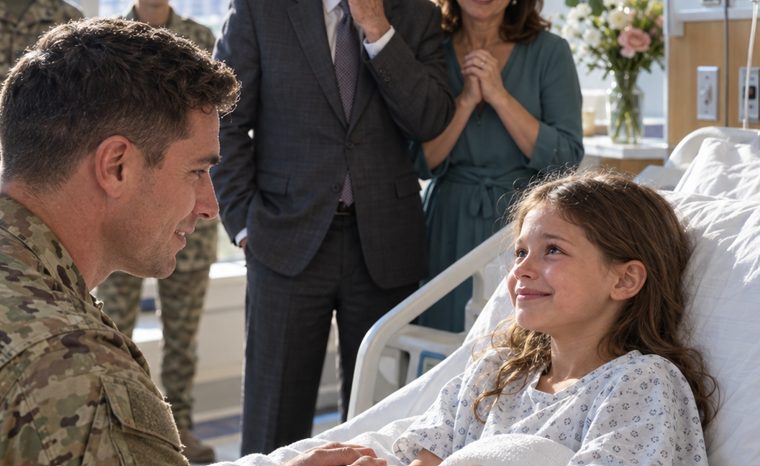
Doctors explained that the original fractures were treatable, but the delay caused permanent nerve damage.
Wren would walk again, but with lasting limitations, chronic pain, additional surgeries, and a brace.
The family’s influence initially seemed enormous.
The Gaddises owned a major local business, employed many people, provided loans throughout the county, and had connections to local institutions. But their influence had limits.
Hospital records, regional 911 recordings, phone data, police database logs, and evidence outside their immediate control could not simply disappear.
Nita provided a sixteen-second video showing Simone at the upstairs window.
Crucially, it also showed that Simone closed the curtain and immediately ran downstairs.
She had not abandoned Wren at the window.
That made what followed worse.
Simone had demonstrated that she could act instantly. Yet minutes later, she deliberately cancelled the ambulance.
Investigators eventually uncovered altered police records and evidence of an earlier workplace accident
in which another injured person’s medical treatment had also been delayed to protect the family business.
After a nineteen-month investigation, consequences followed.
Cade received twenty years in prison. Family patriarch Arliss Gaddis received twelve years, along with a federal conviction connected to workplace reporting fraud.
The police chief who altered records lost his career and received prison time.
Simone pleaded guilty to injury to a child by omission and received probation plus six months of confinement.
A civil settlement eventually provided $4.1 million for Wren’s long-term medical needs.
Today, Wren is thirteen.
She walks with a brace and cannot run long distances, but she became a competitive swimmer.
Her relationship with Simone remains complicated and carefully controlled, with Wren allowed to decide how much contact she wants.
For years, I could barely tolerate closed curtains because they reminded me of what Wren had described.
But when she turned thirteen, she asked for curtains in her bedroom.
She closed them that night without hesitation.
That was when I realized the curtain no longer belonged to her trauma.
It belonged to mine.
What ultimately protected Wren was not money, influence, or revenge.
It was ordinary people doing what others refused to do: a sixteen-year-old girl who picked up a phone and a doctor who documented the truth.
Two phone calls and one required report started everything.
Sometimes ordinary courage is enough to break a system built on everyone else choosing to look away.