After eighteen years of silence, my wife came back—but what she asked of our blind daughters was heartless.
I never believed in second chances—not after what happened nearly two decades ago.
Back then, my wife left me and our blind newborn twins without a second thought. She chose fame over family, ambition over responsibility.
I stayed, forced to become both mother and father, building a life from nothing but determination and love.
Last Thursday, she returned.
And everything I thought I understood—about people, about forgiveness—fell apart.
My name is Mark. I’m 42 years old.
Eighteen years ago, my life split into two chapters: before Lauren left… and after.
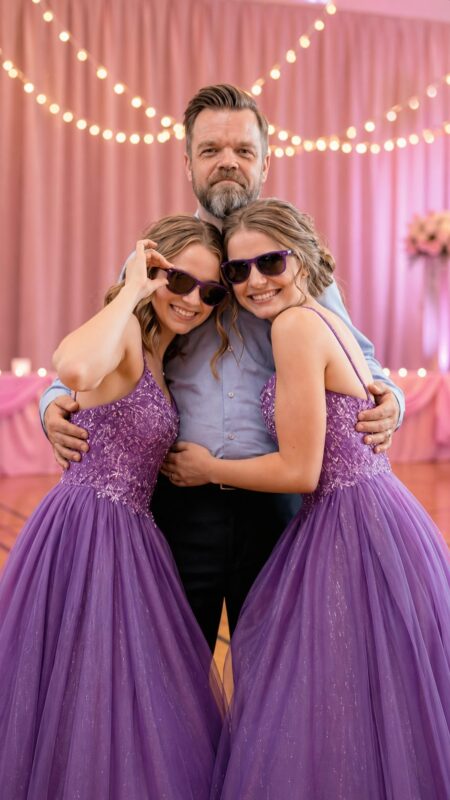
Lauren was my wife—the mother of my twin daughters, Emma and Clara.
They were born blind.
The doctors delivered the news gently, as if apologizing for something beyond their control. I still remember holding those tiny girls, feeling their warmth and fragility—and knowing instantly that nothing about them was broken.
Lauren didn’t see it that way.
To her, it felt like a life she hadn’t signed up for.
Three weeks after we brought the girls home, I woke up to an empty bed.
And a note.
“I can’t do this. I have dreams. I’m sorry.”
That was it. No explanation. No goodbye. Just a choice.
She chose herself—over two helpless babies who needed her more than anything.
From that moment on, life became a blur: bottles, diapers, sleepless nights, and constant fear.
I had no idea what I was doing.
Most days, I felt like I was barely holding everything together. But I made one silent promise—I would never let my daughters feel abandoned, even if they had been.
I read everything I could about raising blind children. I learned Braille before they could speak. I memorized every inch of our apartment so I could turn it into a safe place where they could move freely and confidently.
Little by little, we adapted.
We survived.
But survival wasn’t enough.
I wanted them to truly live.
When the girls turned five, I taught them how to sew.
At first, it was just something to keep their hands busy—a way to build coordination and awareness.
But it quickly became something more.
Emma developed an extraordinary sense of touch. She could run her fingers over any fabric and identify it instantly.
Clara had a natural understanding of structure. She could imagine designs in her mind and bring them to life—without ever seeing them.
Together, we turned our small living room into a workshop.
Fabric covered every surface. Spools of thread lined the windowsill like rows of color. The sewing machine hummed late into the night as we created dresses, costumes—anything our imagination allowed.
In that space, blindness wasn’t a limitation.
It was simply part of who they were.
The girls grew into strong, confident young women. They navigated the world with their canes and their determination. They built friendships. They laughed. They dreamed.
And not once—not ever—did they ask about their mother.
I made sure of that.
To them, her absence wasn’t a loss.
It was a decision.
One evening, while we were working, Emma called out:
“Dad, can you help me with this hemline?”
I walked over and gently guided her hand.
“Right there, sweetheart. Feel that? Smooth it out before you pin it.”
She smiled. “Got it.”
Clara glanced up from her own project. “Dad, do you think we’re good enough to sell these?”
I looked at the dresses they had made—beautiful, detailed, full of heart.
“You’re more than good enough,” I told her. “You’re incredible.”
Then came last Thursday.
It started like any ordinary morning.
The girls were working. I was making coffee.
Then the doorbell rang.
I wasn’t expecting anyone.
When I opened the door, I froze.
Lauren stood there.
Like a ghost from a life I had buried long ago.
She looked different—polished, refined, expensive. Like someone who had spent years carefully crafting an image.
Her hair was flawless. Her clothes likely cost more than our rent.
She wore sunglasses, even though the sky was gray.
When she lowered them and looked at me, her expression was cold.
“Mark,” she said.
I couldn’t move. Couldn’t speak.
I just stood there.
She walked past me anyway—like she still had the right.
Stepping into our home, her eyes scanned everything: the modest furniture, the sewing table, the life we had built.
Her nose wrinkled.
“You’re still the same loser,” she said sharply. “Still living in this… place? You’re supposed to be a man—making money, building something big.”
My jaw tightened.
But I stayed silent.
Behind me, Emma and Clara had gone still.
“Who is it, Dad?” Clara asked softly.
I took a breath.
“It’s your… mother.”
The silence that followed felt endless.
Lauren stepped further inside, her heels echoing against the worn floor.
“Girls!” she said brightly. “Look at you—you’ve grown so much.”
Emma didn’t react.
“We can’t see, remember?” she said calmly. “We’re blind. Isn’t that why you left?”
For a brief moment, Lauren hesitated.
Then the smile returned.
“Of course… I mean, you’ve grown into such beautiful young women. I’ve thought about you every single day.”
“How strange,” Clara replied coolly. “We haven’t thought about you at all.”
In that instant, I had never felt prouder.
Lauren cleared her throat.
“I didn’t come back without a reason. I brought something for you.”
She placed two garment bags on the couch.
Then an envelope—thick, weighty, intentional.
“These are designer dresses,” she said. “And there’s money as well. Enough to completely change your lives.”
Emma and Clara tightened their grip on each other’s hands.
“Why?” I asked. “Why now?”
Lauren’s lips curled into a smirk.
“Because I want my daughters back.”
She set a document on top of the envelope.
“But there’s one condition.”
“What condition?” Emma asked.
Lauren’s smile widened.
“It’s very simple, sweetheart. You can have everything—the dresses, the money, all of it. But in return, you have to choose me over your father.”
The air in the room grew heavy.
“You must publicly admit that he failed you,” she continued. “That he kept you in poverty while I was out building a better future. That you’re choosing to live with me because I can actually provide for you.”
My fists tightened.
“You’ve lost your mind.”
“Have I?” she shot back. “I’m giving them a real opportunity. What exactly have you given them?”
Emma reached toward the contract.
“Dad, what does it say?”
I read it aloud.
A legal document.
A betrayal written in ink.
“She wants you to sign away your relationship with me… in exchange for money.”
Clara’s voice dropped to a whisper. “That’s disgusting.”
“That’s business,” Lauren replied coldly.
Emma slowly stood up, holding the envelope.
“That’s a lot of money.”
My heart sank.
“Emma…”
“Let me finish, Dad.”
She turned to face Lauren.
“It really is a lot of money. Probably more than we’ve ever had at once.”
Lauren smiled again.
“But here’s the funny part,” Emma continued. “We’ve never needed it. We’ve always had everything that truly matters.”
Clara stepped beside her.
“We had a father who stayed.”
“Who never let us feel broken.”
Lauren’s smile vanished.
“We don’t want your money,” Clara said firmly. “We don’t want your dresses. And we definitely don’t want you.”
Emma tore open the envelope.
Bills scattered into the air.
“You can keep it. We’re not for sale.”
Lauren snapped.
“You ungrateful girls! Do you even understand what I’m offering you? I’m famous!”
“For yourself,” I replied calmly.
“And now you’re trying to use us,” Clara added, “as part of your redemption story.”
Lauren’s composure shattered.
“I just wanted the world to see that I’m a good mother!”
“You stayed away because you’re selfish,” Emma said.
Clara moved to the door and opened it.
“Please leave.”
Lauren gathered the scattered money with trembling hands.
“You’ll regret this,” she hissed.
“No,” I said quietly. “You will.”
She walked out.
And the door closed behind her.
Within hours, everything changed.
Emma’s friend had recorded the entire confrontation.
It went viral.
The world finally saw the truth.
Lauren’s carefully crafted image collapsed overnight.
But something far better happened for us.
Emma and Clara were offered scholarships by a prestigious film company—not out of pity, but because of their talent.
Yesterday, I stood on set, watching them work.
Confident. Skilled. Proud.
The director turned to me with a smile.
“Your daughters are incredibly talented.”
“I’m the lucky one,” I replied.
Emma called out, “Dad, how does it look?”
“Perfect,” I said. “Just like you.”
That evening, we sat together in our same small apartment—laughing, sharing takeout, completely at peace.
And I realized something important.
Lauren chose fame—and found emptiness.
We chose each other—and found everything.
Sometimes, the people who walk away from you don’t destroy you.
They show you what truly matters.
And eighteen years later, when she tried to buy her way back into their lives…
My daughters already knew the difference between something that has a price—
And something that is priceless.