On a bitterly cold March morning in Chicago, the first thing I noticed about the little girl was her shoes.
Thin canvas sneakers soaked with icy slush—completely useless against the brutal wind rolling off Lake Michigan.
She stood trembling in the far corner of Hayes’ Market, clutching two dented cans of powdered milk as if they were priceless treasures.
Then the shouting began.
“Hey! What do you think you’re doing?”
Kevin, the owner’s nephew, stormed toward her. Startled, the girl dropped one of the cans, and it slammed loudly against the floor.
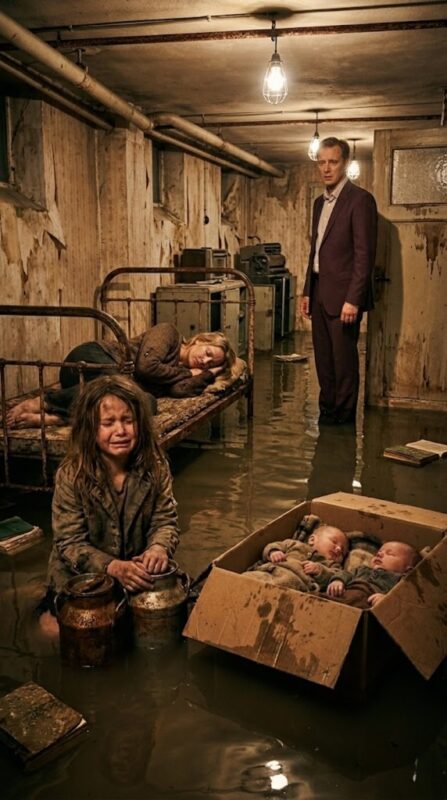
Every customer turned to stare. Some muttered insults about thieves and careless parents. The little girl instantly fell to her knees, tears shaking through her voice as she apologized.
“My brothers are hungry,” she whispered. “Mom hasn’t gotten out of bed in two days. I’ll pay for it someday, I promise.”
Her name was Chloe Sterling, and she couldn’t have been older than eleven.
I had been standing near the coffee machine when I heard her speak. My name is Daniel Mercer. I owned an auto repair shop a few streets away.
At nearly forty years old, divorced and exhausted, I wasn’t looking for trouble that morning. But hearing that child beg for food for her brothers stopped something deep inside me.
Kevin grabbed Chloe’s arm and threatened to call the police.
“No,” I said sharply.
I walked over, picked up the fallen can, and gently asked her name.
Then I filled a basket with groceries—bread, eggs, oatmeal, peanut butter, fruit, chicken, and juice—and paid for every item myself. The judgmental whispers around the store faded into uncomfortable silence.
When Chloe rushed out carrying the bags, I followed her from a distance.
Not because I doubted her story.
Because I believed every word.
She led me through rough South Side streets until we reached a crumbling duplex with broken windows covered in plastic sheets.
After she disappeared inside, I knocked carefully on the door. At first, panic flashed across her face—she thought I had come to turn her in.
But when I quietly asked whether her mother was alive, everything in her expression changed.
The apartment smelled of sickness, mold, and desperation. Two frightened little boys sat huddled together in the freezing living room.
One of them burned with fever beneath a torn blanket.
Then Chloe guided me into the bedroom.
The woman lying weakly on the mattress looked barely alive. Thin. Pale. Broken.
But the second I saw the scar above her eyebrow, the world seemed to stop.
Sarah Jenkins.
Twelve years earlier, Sarah had been the love of my life. Then one day, without warning, she disappeared. I searched for months before finally accepting that she was gone forever.
And now she was here—dying in a freezing apartment.
I called an ambulance immediately despite Chloe’s terrified protests about hospital bills and foster care. I promised her I would take care of everything.
At the hospital, doctors told me Sarah had severe pneumonia, infection, and starvation. Another few hours without help, and she wouldn’t have survived.
Over the following days, I changed everything I could. I brought groceries, cleaned the apartment, arranged medical treatment for the boys, and stayed beside the family every chance I got.
When Sarah finally recovered enough to speak clearly, she confessed the truth.
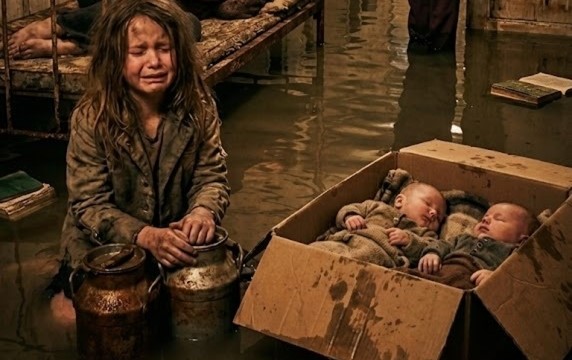
Chloe was my daughter.
Sarah admitted she discovered she was pregnant shortly after leaving me years ago. At the time, my business was collapsing, and she believed disappearing would spare me from more hardship.
Later, she became trapped in an abusive relationship with a violent man named Martin, who fathered the two boys before abandoning them completely.
I was furious about the years we had lost. Furious that my daughter had suffered while I never even knew she existed.
But none of that mattered more than the children standing in front of me now.
Unfortunately, Chloe overheard everything herself.
Heartbroken and angry, she accused her mother of lying while she carried the burden of survival alone. She ran from the hospital in tears, and I followed her into the stairwell.
“I don’t need a dad now,” she cried.
“I know,” I answered softly. “But I’m here anyway. And I’m not leaving again.”
Slowly, we became a real family.
I helped Sarah recover, moved them into a safe home, and fought Martin in court when he tried to regain control over the boys.
With evidence of abuse, legal protection, and relentless determination, we removed him from their lives permanently.
Months later, life finally felt peaceful. Chloe joined a soccer team, the boys regained their health, and Sarah slowly rebuilt her future.
One evening, while we sat together outside the new house, Sarah admitted she was tired of running from happiness.
I kissed her, and for the first time in years, it felt like both of us had been given another chance.
Then Chloe leaned out the upstairs window and shouted, “You know I can hear you two, right?”
We burst into laughter.
A second later, she smiled softly and added:
“Goodnight, Dad.”
One year after the morning we met in Hayes’ Market, Chloe walked back into the store wearing warm winter boots and a bright red jacket. She placed two cans of powdered milk on the counter beside twenty dollars.
“I know I don’t owe you anything,” she told Kevin kindly. “But I wanted to repay the debt anyway.”
As we stepped back out into the Chicago sunlight together, I looked at my daughter, at Sarah, and at the boys laughing ahead of us.
Our story had begun with hunger, fear, and heartbreak.
But somehow, against every odd, it ended with family.