My parents told Grandma Eleanor they were taking her to lunch.
Three hours later, a nursing facility in Ohio called me.
Her suitcase was sitting in the lobby, and my parents had disappeared before completing the admission paperwork.
I called both of them. No answer.
I drove 190 miles to get Grandma.
She was waiting beside one suitcase and a bag of medications.
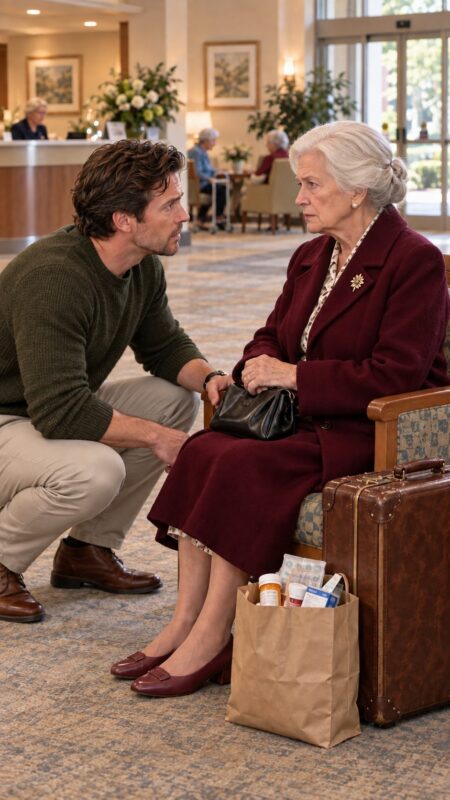
Without crying or asking questions, she climbed into my car and fastened her seatbelt.
“Don’t call them,” she said. “I’ll tell you where to drive.”
Our first stop was the county courthouse.
On the highway, Grandma handed me a bank statement showing three suspicious withdrawals: $12,000, $18,000, and $25,000.
My father, Arthur, had temporary power of attorney after her knee surgery. He claimed the money was paying for her care.
Then Grandma revealed an envelope marked HOUSE DEED.
“They wanted me out of the way,” she said.
At the courthouse, Grandma requested every document filed under her property address during the previous ninety days.
One document showed that her house, worth nearly $640,000, was being transferred to my father for one dollar.
Grandma stared at the signature.
“That isn’t mine.”
The transfer had not yet been finalized. Suddenly, everything made sense.
If Grandma remained isolated in a nursing facility, my parents could argue that she was incapable of handling her affairs.
Next, we went to the bank. Grandma immediately revoked Dad’s access.
The manager confirmed the $55,000 in withdrawals and then discovered another $40,000 cashier’s check Grandma had never authorized.
He contacted the fraud department.
My phone filled with missed calls. Finally Dad texted:
IVAN, THIS IS A FAMILY MATTER. BRING YOUR GRANDMOTHER HOME.
“Home,” Grandma said. “That’s exactly where we’re going.”
When we reached her house, Dad’s SUV was outside—and a moving van was parked nearby.
Inside, boxes lined the walls. Grandma’s china cabinet was empty, Grandpa’s antique clock was wrapped in blankets, and family photographs had disappeared.
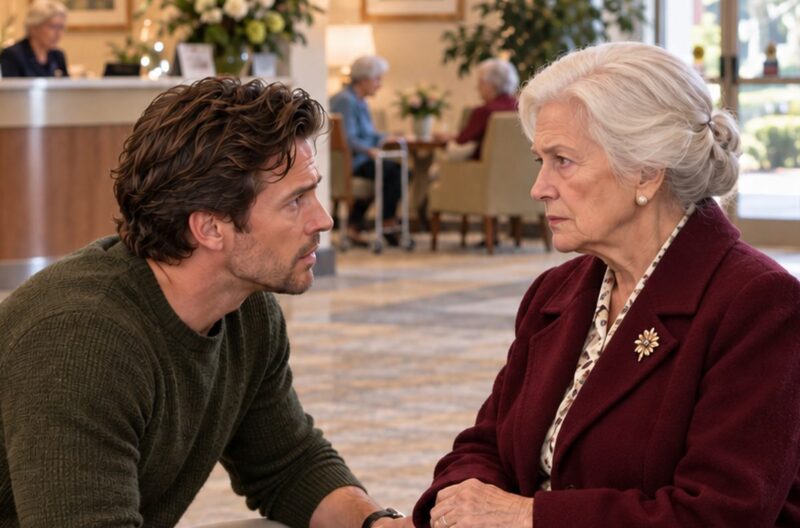
Dad and Mom came downstairs.
“Mom, you weren’t supposed to leave the facility,” Dad said.
“I never agreed to stay.”
They claimed they were preparing the house for sale because Grandma could no longer maintain it.
Then Grandma placed the deed envelope on the table.
Dad’s expression changed.
Inside was not only the deed but a letter Grandpa had written years earlier.
Worried about Dad’s growing debts, Grandpa and Grandma had created a family trust.
Grandma had lifetime rights to the house, but after her death, ownership would pass to me—not Dad.
Then headlights appeared outside.
Grandma’s attorney arrived with a courthouse representative and someone from the bank’s fraud department.
Grandma had arranged the meeting days earlier because she already suspected money was disappearing.
She simply hadn’t known how far my parents would go.
The fraudulent property transfer was stopped.
Dad’s power of attorney was revoked, and most of Grandma’s missing money was eventually recovered or returned.
Grandma moved back home, changed every lock, hired help for the yard, and arranged transportation for appointments.
Three months later, she showed me a new trust.
She had changed the house’s future again.
After her death, neither Dad nor I would inherit it. Instead, the house would be sold, with most of the
proceeds funding emergency housing and legal assistance for elderly people facing financial exploitation or abandonment.
A smaller amount was reserved for me—enough for a down payment on a modest home.
“I thought Grandpa wanted me to have the house,” I said.
“He wanted you protected,” Grandma replied. “There’s a difference.”
She also left me a handwritten note explaining that I had driven 190 miles believing she needed
rescuing, when what she truly needed was one person to show her she still mattered.
A year later, Grandma was still living independently. Her garden looked better than ever, and she had joined a senior group and started painting classes.
My relationship with my parents never fully recovered, but Grandma never asked me to hate them.
She taught me that forgiveness doesn’t mean giving someone the same key twice.
One Sunday, I arrived for dinner and found her waiting on the porch with lemonade.
“Still keeping the passenger seat clean for me?” she asked.
“Always.”
“Good. I might need another ride.”
“Where?”
She gave me the same calm look she had outside the nursing facility.
“I’ll tell you when we get there.”
This time, I wasn’t worried.
I grabbed my keys.