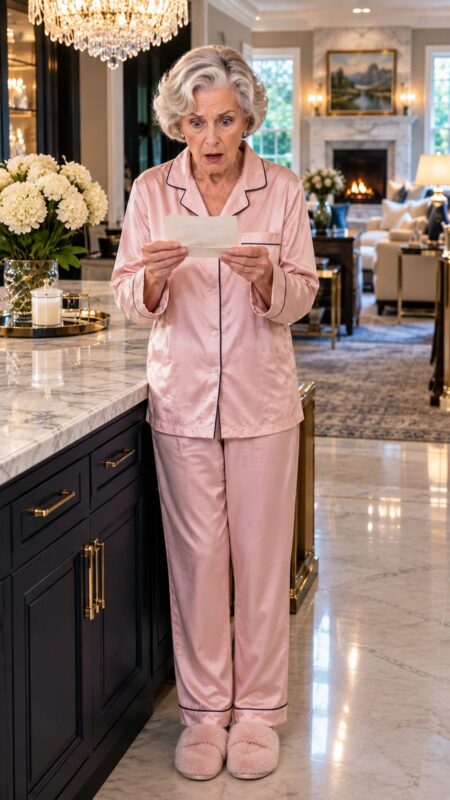
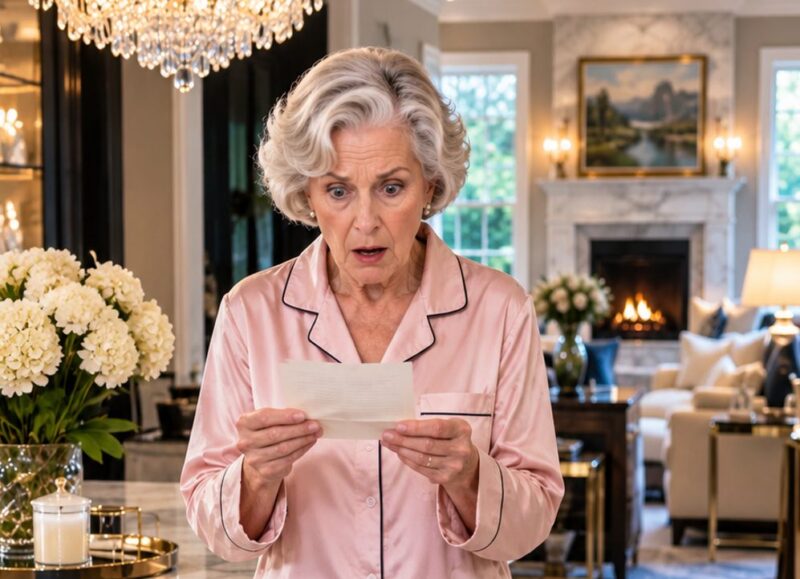
“We went to Hawaii. Don’t worry, Mrs. Margaret. At your age, it’s better for you to stay home and rest.”
Margaret Collins read the note three times while standing alone in her son Daniel’s silent Scottsdale home.
It was Thanksgiving morning, but Daniel, his wife Rebecca, and their children, Emily and Jack, were gone.
At seventy-three, Margaret wasn’t helpless. What hurt wasn’t simply being left behind—it was realizing her family saw her as useful rather than loved.
Four years earlier, after her husband Arthur died, Daniel invited Margaret to live with them.
She sold her apartment, contributed to the house, bought furniture and appliances, paid for groceries, cooked meals, and helped care for the children.
At first, they called her a blessing. Gradually, she became unpaid help.
Six months earlier, Margaret had overheard Rebecca admitting that they kept her around because she watched the children and helped financially.
Margaret had remained silent.
But the Thanksgiving note changed everything.
She pulled out a blue folder containing receipts for everything she had purchased:
the refrigerator, living room furniture, dining table, washer, dryer, television, coffee maker, curtains, and more.
Margaret called movers.
The next morning, everything legally belonging to her was loaded onto a truck.
She left the children’s belongings untouched, stopped paying the household bills, and placed a message beside Rebecca’s note:
“Daniel, starting today, your expenses belong to you again.”
Margaret moved into a peaceful retirement community in Santa Fe. Her apartment was smaller, but it was hers.
When Daniel and Rebecca returned from Hawaii, they discovered their nearly empty house.
Margaret’s phone filled with angry calls, but she refused to answer.
Two days later, police officers arrived at her apartment after Daniel reported her for theft.
Margaret calmly showed them the receipts proving she owned everything she had taken.
Then Daniel and Rebecca appeared.
“How could you do this to us?” Rebecca demanded.
Margaret answered, “I asked myself the same thing when I read your note.”
The police confirmed no crime had occurred.
Three weeks later, Daniel and Rebecca filed a civil lawsuit demanding compensation for the household property. Margaret arrived in court carrying her blue folder.
Rebecca claimed Margaret had cruelly taken essential family belongings.
But when the judge examined the receipts, every major item was registered as Margaret’s purchase.
Daniel had no receipts proving ownership.
The judge dismissed their claim.
Outside the courthouse, Daniel finally admitted that Rebecca had said Margaret would ruin their Hawaii vacation—and he had agreed to leave his mother behind.
“I was wrong,” he said.
Margaret loved her son, but she refused to return.
“When you want me to see my grandchildren, bring them to my apartment. With respect. No shouting. No asking for money. No using my love as a wallet.”
Over the following months, Margaret rebuilt her life.
She joined a book club, painted watercolors, helped other residents with video calls, bought flowers for herself, and filled her apartment with things that made her happy.
On her refrigerator, she placed one rule:
“My love is not to be used to abuse me.”
In spring, Daniel brought Emily and Jack to visit. The children rushed into Margaret’s arms.
“Grandma, why don’t you live with us anymore?” Jack asked.
“Because sometimes adults need to learn to take care of themselves too.”
Daniel remained respectfully near the doorway. He didn’t ask for money or enter without permission.
It was a small beginning.
The following Thanksgiving, Margaret prepared dinner in her own apartment and invited friends from the community. She even set a place in memory of Arthur.
The table was filled with laughter. Nobody ordered her around.
Nobody questioned what she had spent. Nobody made her feel guilty for resting.
Later, Margaret stood on her balcony remembering the empty house, the Thanksgiving note, the moving truck, the blue folder, and the courtroom.
She didn’t hate Daniel, but she wasn’t sorry.
Sometimes a woman doesn’t leave to punish anyone.
She leaves to save what remains of herself.
That night, Margaret looked around her apartment.
Everything was hers—not only the furniture, but her peace, her time, and her voice.
Her family had mistaken her silence for weakness.
They were wrong.
Sometimes silence is the first sound of a new life.