“Dad… My Little Sister Won’t Wake Up. We’re So Hungry.”
Those words shattered my world in an instant.
Without hesitation, I grabbed my keys and raced to find my children. But what I would eventually learn about their mother would change all of our lives forever.
The Phone Call
I was sitting in the middle of an important board meeting when my phone rang.
Normally, I would have ignored an unknown number.
Thankfully, I didn’t.
The moment I answered, I heard my six-year-old son’s frightened voice.
“Dad?”
My heart stopped.
“Micah? What’s wrong?”
His voice trembled.
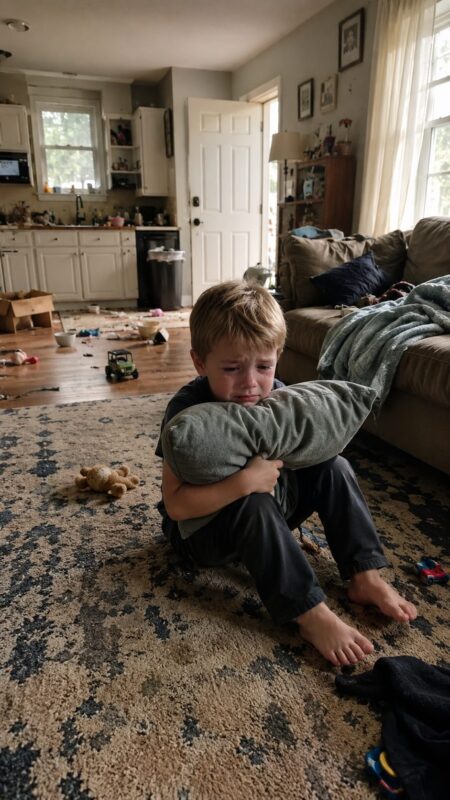
“Elsie won’t wake up properly. She’s really hot. Mom isn’t here. And we don’t have anything left to eat.”
Everything else ceased to matter.
The meeting.
The clients.
The business deal.
None of it existed anymore.
I rushed out of the conference room while repeatedly calling my ex-wife, Delaney.
Every call went straight to voicemail.
Just days earlier, she had told me she was spending time with the kids at a friend’s lake cabin during her custody week. I had no reason to doubt her.
Now my son was alone, frightened, and asking for help.
The House
I drove to Delaney’s rental home in East Nashville faster than I ever thought possible.
The moment I arrived, something felt wrong.
The front door was slightly open.
The house was silent.
Too silent.
Inside, I found Micah sitting on the living room floor hugging a pillow tightly against his chest.
His eyes looked exhausted.
Terrified.
Relieved.
“I thought maybe you weren’t coming,” he whispered.
The words hit me harder than anything else.
Then he pointed toward the couch.
Three-year-old Elsie lay beneath a blanket.
Her cheeks were flushed.
Her lips were dry and cracked.
Her body radiated heat.
When I picked her up, she barely reacted.
Fear tightened around my chest.
I carried her toward the door and glanced into the kitchen.
The sight told the rest of the story.
The refrigerator was almost empty.
Dirty dishes overflowed in the sink.
There was barely any food in the house.
My children had been trying to survive on their own.
The Drive to the Hospital
I buckled both kids into the car and headed straight for Vanderbilt Children’s Hospital.
Halfway there, Micah spoke quietly from the back seat.
“Is Mom mad at me?”
The question broke my heart.
“No, buddy,” I said gently. “Nobody is mad at you. You’re safe now.”
He nodded and stared out the window.
Then he confessed something that nearly brought me to tears.
“I kept giving Elsie crackers because she wouldn’t eat anything else.”
At that moment, I realized my six-year-old son had spent days trying to take care of his little sister by himself.
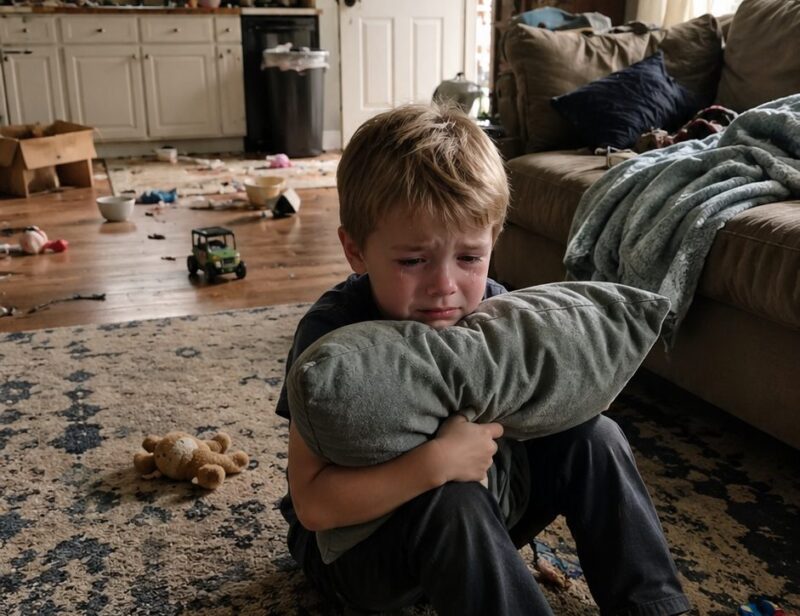
Trying to keep her alive.
The Truth
Doctors rushed Elsie into treatment the moment we arrived.
The next several hours felt endless.
I sat beside Micah in the waiting room, holding his hand while imagining every possible outcome.
Finally, a doctor approached.
“Your daughter is going to be okay.”
Relief nearly knocked the air from my lungs.
The doctor explained that Elsie was suffering from severe dehydration combined with a serious infection.
She had arrived just in time.
Another delay could have ended very differently.
But the surprises weren’t over.
A nurse approached me later with information that left me speechless.
Delaney had been admitted to another hospital several days earlier.
She had been involved in a serious car accident.
She arrived unconscious and unidentified.
The driver who had been with her fled the scene before emergency services arrived.
Suddenly, everything became far more complicated.
Delaney hadn’t intentionally vanished for days.
She had been lying unconscious in a hospital bed while our children were left alone.
Moving Forward
Even so, the damage had already been done.
I immediately filed for emergency full custody.
When I eventually visited Delaney, she looked devastated.
Through tears, she admitted the truth.
She had left the children sleeping while she went out for drinks with a man she had recently met.
She expected to return within a few hours.
Instead, tragedy struck.
I told her everything.
How Micah had cared for Elsie.
How close our daughter had come to dying.
How terrified they had been.
Delaney broke down completely.
But at that point, my focus wasn’t revenge.
It was protecting our children.
Healing
The months that followed were difficult.
Micah developed anxiety and nightmares.
He constantly checked on Elsie, terrified something might happen to her again.
Therapy became a regular part of our lives.
I reduced my workload and learned an important lesson.
Being a parent isn’t about dramatic rescues.
It’s about showing up every day.
Being present.
Being reliable.
Meanwhile, something unexpected happened.
Delaney changed.
She accepted responsibility for her actions.
She entered counseling.
Attended recovery programs.
Ended unhealthy relationships.
Followed every court requirement without complaint.
When supervised visits began, the children were hesitant.
But she kept showing up.
Every week.
Without fail.
Slowly, trust began to return.
Elsie started smiling more.
Micah stopped looking over his shoulder.
And little by little, our family began to heal.
A New Beginning
Months later, during the custody hearing, experts recommended gradually increasing Delaney’s parenting time.
My attorney expected me to fight the recommendation.
Instead, I stood before the judge and told the truth.
“Yes, she made serious mistakes,” I said. “But I’ve also watched her work every day to become the mother our children deserve.”
The courtroom fell silent.
The judge awarded me primary custody while approving a path toward shared parenting.
Outside the courthouse, Delaney thanked me.
“You could have destroyed me,” she said quietly.
I shook my head.
“This was never about revenge.”
It was always about the kids.
The rebuilding process was slow and imperfect.
But it worked.
One evening, after a weekend visit, Elsie handed me a drawing.
Two houses stood on opposite sides of the page.
A giant rainbow connected them.
Beneath it stood four stick figures.
“It’s us,” she said proudly. “We live in two different places, but we still belong together.”
I looked at the picture for a long moment.
Our family would never look the way it once had.
But it was still a family.
And for the first time in a long time, that felt like enough.
We carried the scars of everything we had endured.
Our lives were more complicated than they had ever been.
Nothing looked the way it once had.
Yet somehow, we were stronger because of it.
That night, as I stood in the hallway listening to my children breathe peacefully in their sleep, a realization settled over me.
The hardest chapter of our lives had not broken us.
We had survived it.
Not by tearing each other apart.
Not by holding on to anger or seeking revenge.
But by choosing, day after day, to rebuild what had been damaged.
It wasn’t easy.
It wasn’t perfect.
But it was real.
And in the end, that choice—to heal instead of destroy—became the foundation of the future we almost lost.