After doctors warned that another pregnancy would probably kill me, I accepted that I would never have the daughter I had always dreamed of.
Years later, my husband called me from a hospital, where a newborn girl—and an unexpected confession—were waiting.
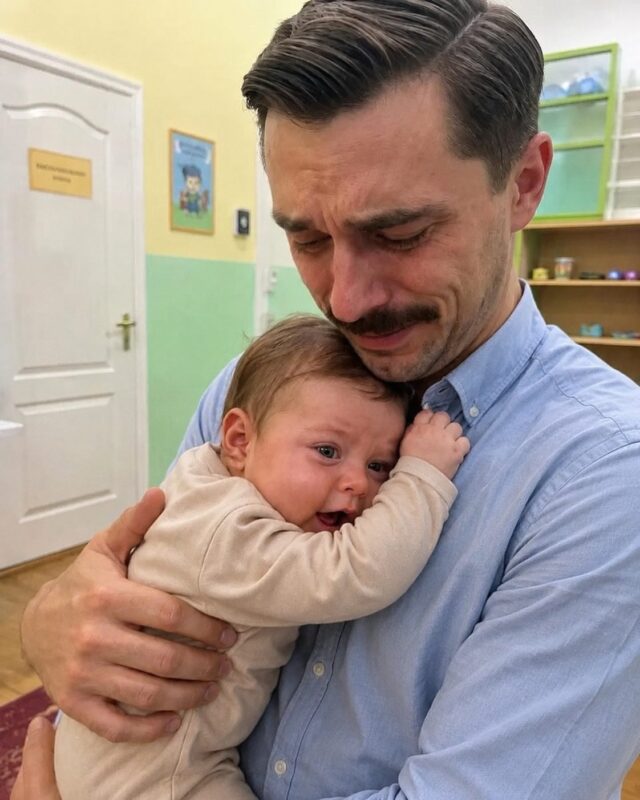
“I need you to come,” James said. “There’s a baby here.”
“Whose baby?”
“Please. Just come.”
We already had three wonderful boys, ages nine, seven, and four.
After our youngest was born, my doctor told us another pregnancy would be extremely dangerous.
My previous pregnancy had involved serious complications, and she said there was no safe way for us to try again.
James and I had always wanted a daughter.
I had even chosen her name years earlier: Clara. But eventually, we packed away the baby clothes and accepted that our boys needed their mother more than we needed another child.
When I reached the hospital, James stood outside a maternity room with red eyes.
Through the glass, I saw a newborn beneath a pink blanket.
“Is she yours?” I demanded.
“What? No. Absolutely not.”
“Then whose baby is she?”
James hesitated before asking whether I remembered Anna.
She had been his first love, long before we met. They had planned a future together when they were twenty-two, but eventually separated.
Anna married someone else, and James had not spoken to her in eleven years.
Anna had been seven months pregnant when her husband abandoned her. She had no parents, siblings, or close relatives nearby.
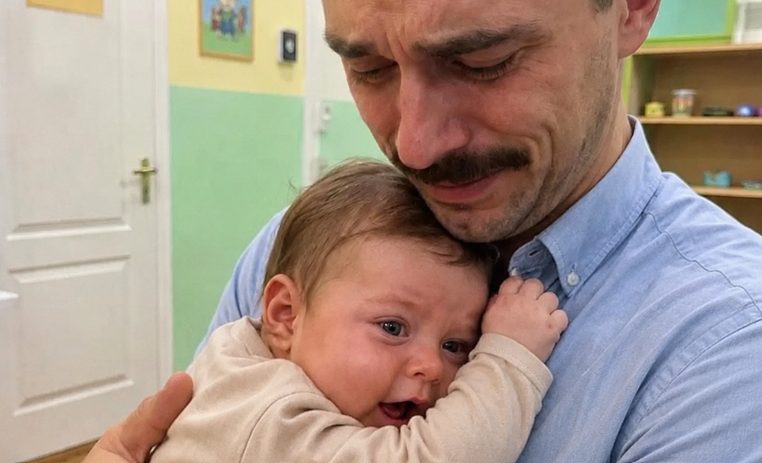
That morning, she went into labor and reached the hospital alone. Her daughter was born healthy, but Anna suffered severe complications and died soon afterward.
I still didn’t understand why the hospital had contacted James.
A nurse explained that when they asked Anna if there was anyone they could call, she repeatedly said James’s name.
Using an old emergency-contact record, the hospital managed to find him.
Anna had built an entirely different life, yet in her final moments, the only person she remembered trusting was James.
The baby made a quiet sound inside the room.
“She has no one,” James said. “Her father has refused custody, and social services haven’t found any relatives willing to take her.”
Then he finally told me why he had called.
“I want us to apply for her. Foster placement, guardianship, adoption—whatever is possible. I want to bring her home.”
He promised that if I said no, he would never ask again.
But when I looked through the glass at that tiny girl, I didn’t feel jealous.
I thought of Anna, alone and frightened, using her last opportunity to make sure her daughter would not be forgotten.
“Can I hold her?” I asked.
Ten minutes later, the newborn rested against my chest. Her tiny fingers opened against my shirt as James knelt beside us.
“We spent years wishing our boys could have a little sister,” I whispered. “Maybe we were waiting for a different kind of miracle.”
The process was not easy.
For nine months, we completed interviews, background checks, home studies, and court hearings.
Social workers searched for relatives, while the biological father formally gave up his parental rights.
Another family could still have been selected, but eventually we became her foster parents, and months later, the adoption was approved.
The greatest surprise came when we saw the baby’s birth certificate.
Anna had named her Clara—the same name I had carried in my heart since I was nineteen. She could not possibly have known.
We kept the name, but I asked James to add something.
Our daughter became Clara Anna, ensuring that her birth mother’s name would always be spoken, written on school forms, called through our home, and celebrated on birthdays.
One day, Clara will ask about the woman who gave birth to her.
I will tell her the truth: Anna was alone and had almost nothing left she could control, yet she used her final clear thought to find her daughter a family.
She said one name—and it led Clara all the way home.