I married a man 30 years older for his fortune — after his funeral, his lawyer gave me a box and said, «He made sure you got exactly what you deserved.»
Everyone thought they knew why I married Russell, and honestly, they weren’t entirely wrong.
I was 32, drowning in debt, terrified that one missed paycheck could leave me homeless.
Russell was 62, wealthy, widowed, and painfully lonely.
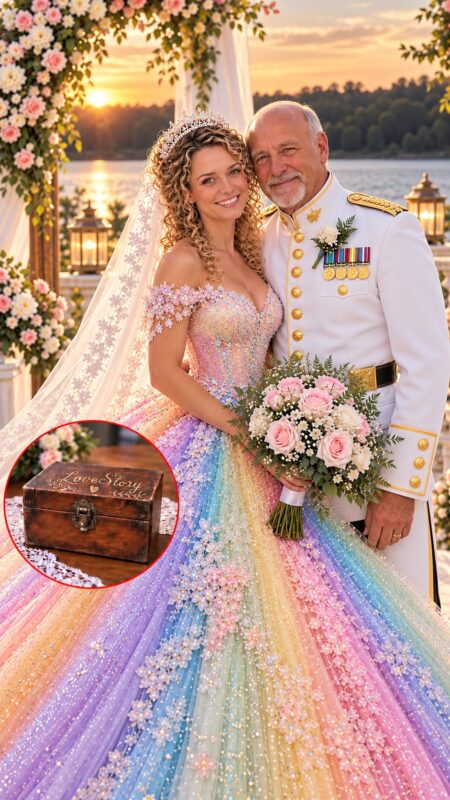
We met at a charity dinner where I was serving champagne.
He noticed my aching feet before anything else.
Three months later, he proposed.
My friends thought I was making a mistake, and Russell’s children were certain I wanted his money.
After our wedding, his daughter warned me I would get nothing. Russell only smiled.
“She’ll get exactly what she deserves.”
At first, I loved the security his money gave me.
But I hadn’t expected Russell to be gentle, patient, and kind. Over time, our marriage stopped feeling like a way to survive. I truly loved him.
Then he got sick. Six weeks later, he was gone.
After the funeral, his lawyer called me to his office.
Russell’s children were already there. On the desk sat a small wooden box.
The lawyer slid it toward me and repeated Russell’s words: “He made sure you got exactly what you deserved.”
Inside were the cheap black flats I had worn the night I met Russell. Beneath them was a letter.
Russell wrote that he had always known why I married him.
That first night, he had seen how exhausted I was, but he also watched me help an elderly waiter clean up broken glasses while everyone else complained.
Later, he learned I had worked two jobs and had once given almost my entire paycheck to another waitress facing eviction with her child.
“You were already drowning,” he wrote, “and somehow, you still reached down to help someone who was drowning deeper.”
He understood I had married him partly because I feared poverty.
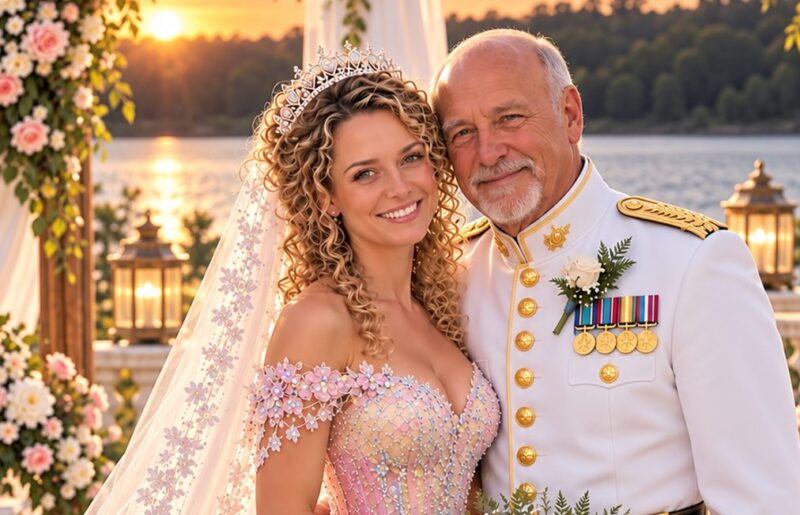
Then came his confession: “You weren’t the only one who married for selfish reasons.
You married because you were afraid of being poor. I married because I was afraid of dying alone. So perhaps we saved each other.”
I could barely read through my tears.
Russell wrote that somewhere along the way, we had both changed. I was no longer the woman who married for security, and he was no longer the lonely man who married for company.
We had become family.
The lawyer told me to check inside the right shoe. Hidden beneath the insole was a brass key.
Russell had divided his financial estate equally between his children. I received none of that money, but strangely, I wasn’t disappointed.
The key belonged to a small white house overlooking a lake. Russell and I had once driven past it, and I had jokingly said it was the kind of home I would choose.
He bought it three weeks later.
On the back of the photograph, Russell had written:
“A home should be somewhere you stay because you want to, not somewhere you stay because you’re afraid you can’t afford to leave.”
But there was more.
Russell had created the Russell and Claire Bennett Fund and placed ten million dollars into a charitable
trust for emergency housing, debt assistance, job training, and childcare grants for people facing
eviction, homelessness, or sudden financial crisis.
People like I had once been.
He had named me chairperson.
His daughter protested that I had married him for money. The lawyer replied, “Your father knew. What mattered was who she became when she no longer needed his money.”
Six months later, I moved into the lake house.
The old shoes were placed in a glass case at the foundation’s office beneath a plaque: “There’s a difference between greed and fear.”
In our first year, the foundation helped 127 families avoid eviction.
Russell’s final letter ended with one sentence I will never forget:
“Claire, don’t spend the rest of your life proving that you deserved my love. Use it proving that someone else deserves a second chance.”
So that is what I’m trying to do.