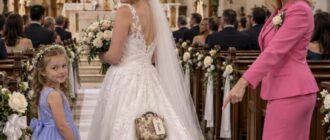
My family begged me not to wear my Army uniform to my grandfather’s military honor ceremony because they said it would “embarrass” them in front of important guests.
My brother mocked my medals, and my father told me real success happened in boardrooms, not in uniform.
I said nothing and took my seat near the back of the ballroom.
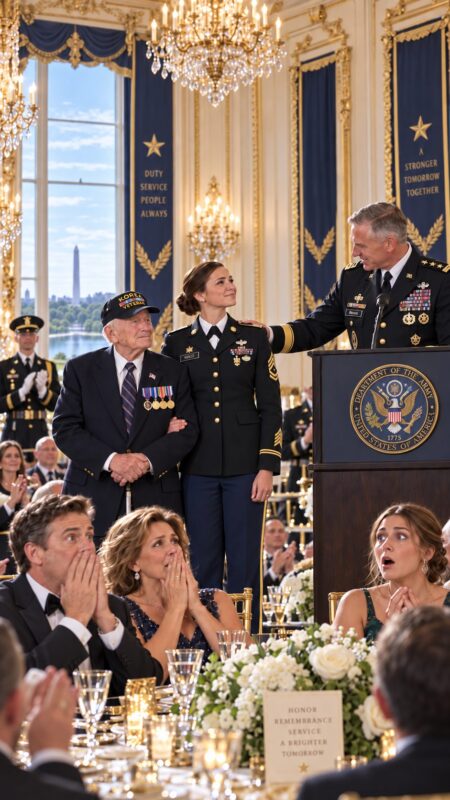
What none of them knew was that a Pentagon delegation had arrived for a second ceremony my family knew nothing about.
Then a four-star general stepped to the microphone.
“Ladies and gentlemen, today we are honoring not one hero—but two.”
My name is Staff Sergeant Maya Parker.
My grandfather, Thomas Parker, was turning ninety, and our family had organized a large military tribute
for him at a heritage center overlooking the Potomac outside Washington, D.C.
Grandpa had served in the Army when he was young and spent the rest of his life helping veterans.
He rarely discussed his service, but his study was filled with old photographs of soldiers beside muddy vehicles.
As a child, I thought they were ordinary pictures.
When I grew older, I understood each one represented someone Grandpa remembered.
That was partly why I joined the Army.
My father never understood.
Richard Parker had built a successful commercial real-estate company.
My older brother Daniel joined him after business school, helping expand Parker Development across several states.
My younger sister, Claire, became an attorney and married another attorney.
Then there was me.
The enlisted soldier.
To my father, Daniel had ambition, Claire had professionalism, and I had simply made an unusual life choice.
When I arrived at the ceremony in my Army service uniform, Daniel stared at me.
“You actually came dressed like that?”
“Yes.”
He reminded me that members of Congress, CEOs, and senior military officers were attending.
“That makes the uniform seem appropriate,” I replied.
His wife, Ashley, looked at my ribbons.
“Don’t you think all those medals are a little dramatic?”
“They’re not costume jewelry.”
Daniel shook his head.
“Here we go.”
I let it go. That was what I usually did around my family.
Inside, the ballroom was filled with veterans, executives, retired generals, military flags, and photographs from Grandpa’s life.
My father quickly pulled me into a hallway.
“Today is about your grandfather,” he said. “I don’t want unnecessary attention.”
“You think my uniform takes attention away from him?”
“There are important people here. Daniel has investors attending.”
I stared at him.
“What does Daniel’s business have to do with Grandpa’s military ceremony?”
Dad sighed.
Then he said something I would remember for years.
“Compared to what Daniel has accomplished, being a career soldier simply isn’t particularly impressive anymore.”
My mother stood nearby and heard everything.
She looked down.
That hurt even more.
Daniel had a corner office, a company title, and an expensive home.
I had spent years responsible for soldiers—training them, protecting them, and making decisions where mistakes could injure people rather than affect quarterly profits.
But arguing would not change my father’s definition of success.
“Understood,” I said and walked outside.
I stood beside the river until my anger settled.
Then my phone rang.
Restricted number.
“Staff Sergeant Parker.”
“Ma’am, this is Lieutenant Colonel Reeves. The Pentagon delegation has arrived.”
My posture immediately straightened.
“The Chief’s vehicle is entering the security area. Are you in position?”
Through the windows, I saw Daniel laughing with executives while Dad spoke with donors.
None of them knew.
“Yes, sir.”
Months earlier, I had learned the Army intended to recognize me for my actions during an overseas multinational disaster-response mission.
Details had remained restricted while several governments completed their reviews.
Once enough information was cleared, the Army arranged the presentation.
I asked for it to happen during Grandpa’s ceremony.
Not because I wanted attention.
Because he was the reason I had chosen this life.
Only Grandpa, military leadership, the event coordinator, and my chain of command knew.
I returned to my seat.
An hour later, the lights dimmed.
General Andrew Halstead, the Army Chief of Staff, stepped onto the stage and spoke about Grandpa’s service, courage, and duty.
Then his tone changed.
“Sergeant Major, bring the case forward.”
A senior enlisted leader approached carrying a presentation case.
My father slowly turned toward me.
Daniel stopped smiling.
General Halstead looked across the ballroom.
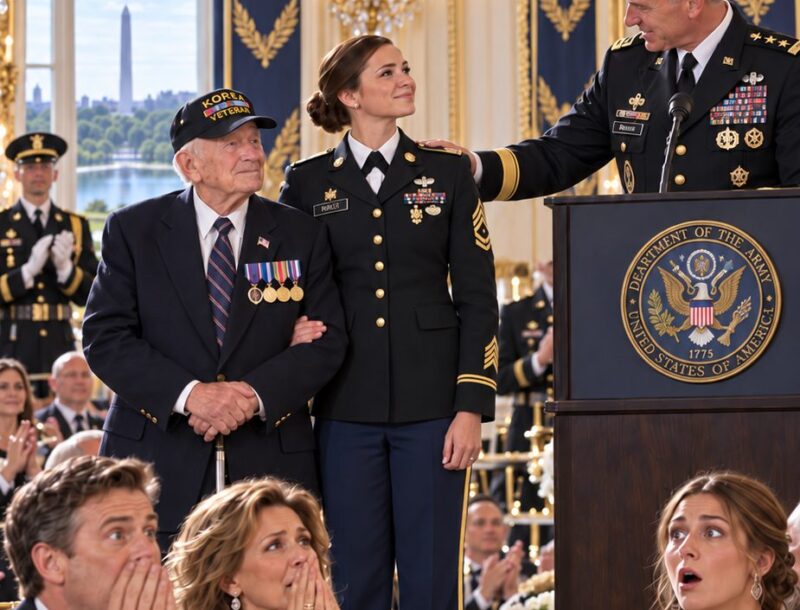
“Today, we honor not one hero—but two.”
Then he announced:
“Staff Sergeant Maya Parker, United States Army, please join me on stage.”
Nobody at my table moved.
I stood.
Daniel whispered, “What is this?”
I looked at him.
“Apparently something unimpressive.”
Then I walked toward the stage.