My Daughter-in-Law Attacked Me After I Refused to Give Her Family My House
Easter dinner was supposed to be peaceful. Instead, it exposed a plan to take control of my home.
My name is Margaret Lawson.
I’m sixty-two, widowed, and the sole owner of a four-bedroom house outside Columbus, Ohio.
For months, my son Daniel and his wife, Vanessa, had pressured me to let Vanessa’s parents move in.
They claimed it would be temporary, but their plans soon included two bedrooms and converting my garage into a workshop.
I repeatedly refused.
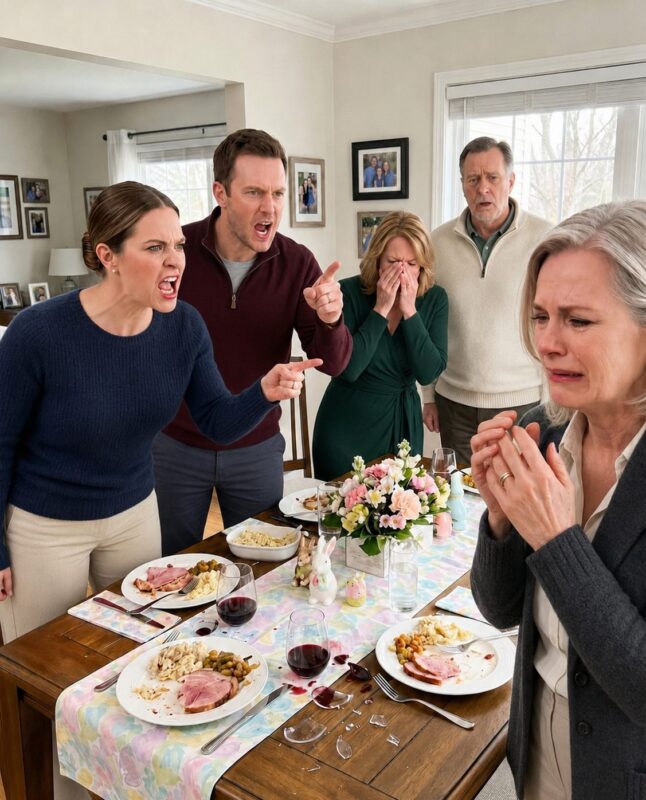
During Easter dinner, Daniel raised the subject again in front of Vanessa’s parents.
“You have empty bedrooms,” Vanessa argued.
“They’re my bedrooms,” I replied. “You don’t get to volunteer my house.”
Daniel called me selfish. Vanessa became furious, grabbed her wine glass, and threw it.
It struck my forehead and shattered. Rather than apologizing, Daniel accused me of overreacting.
I quietly pressed a napkin against the injury, drove to the emergency room, and texted my attorney, Rachel Kim: “Phase one is complete.”
My neighbor, retired firefighter Thomas Reed, had witnessed me leaving and called 911.
Officers arrived at the hospital, documented my injury, and took my statement. I chose to pursue charges.
Six weeks earlier, I had told Rachel that Daniel and Vanessa seemed determined to control my property.
Daniel had requested access to my bank accounts, while Vanessa had presented me with a power-of-attorney form.
Daniel had also suggested adding his name to my deed.
Rachel advised me to state my refusal clearly before witnesses and document whatever followed.
We never expected an assault, but it revealed how far their entitlement had gone.
The next morning, I revoked Daniel’s limited financial authorization, gave him thirty days to remove his belongings, and changed my estate plan.
Most of my property would now support charities and an education trust for future grandchildren.

Vanessa soon texted that her parents had already surrendered their apartment because Daniel promised I would eventually agree.
Then Daniel warned me that he and Vanessa had already “put something in motion.”
Rachel and I checked my credit and discovered an unfinished home-equity loan application submitted in my name.
It contained my Social Security number, income, and the estimated value of my house.
When confronted, Daniel claimed Vanessa had started the application using a copy of one of my tax forms.
He admitted they were overwhelmed by medical bills, credit-card debt, and other expenses.
To them, my paid-off home represented money they believed I should share.
The bank opened a fraud investigation.
Digital records connected the application to Daniel and Vanessa’s apartment.
Vanessa had also used equipment at her workplace to copy my personal documents.
Her assault case ended with probation, community service, anger-management classes, and an order restricting hostile contact.
She later accepted additional consequences for using my information without permission.
Daniel was not charged because investigators could not prove he had submitted the application himself.
When Daniel collected his belongings, he accused me of abandoning my only son.
I gave him a letter explaining that a future relationship required firm boundaries: no access to my finances, no pressure about my house, no unexpected visits, and personal counseling.
Setting those boundaries hurt, but protecting myself was necessary.
Three months later, Daniel separated from Vanessa.
He eventually returned and admitted that he had given her my paperwork, promised her parents they could move in, and assumed that being my son gave him a claim to my property.
I accepted his apology, but I didn’t return his key or restore his inheritance. Forgiveness did not mean pretending nothing had happened.
By the following Easter, Daniel was living independently, attending therapy, and paying his debts.
We shared dinner again with Rachel and Thomas. When Daniel raised his glass, he toasted, “To Mom’s house.”
“My house,” I corrected.
He nodded. “Exactly.”
The police reports, changed locks, revised will, and fraud investigation were never about revenge.
They were about making my boundaries visible.
Daniel and Vanessa saw empty rooms and unused equity. I saw the home and security my husband and I had spent thirty years building.
Empty never meant available.
Family never meant ownership.
The house was mine, and the choice had always been mine.