There is a certain kind of grief that arrives quietly.
Three years had passed since I buried my daughter, Phoebe, but at her widower Emmett’s wedding, the grief returned.
I stood outside the church watching my five-year-old granddaughter, Margot, happily twirl in her pink dress and shiny shoes.
Phoebe should have been there.
Margot had lost her mother at two.
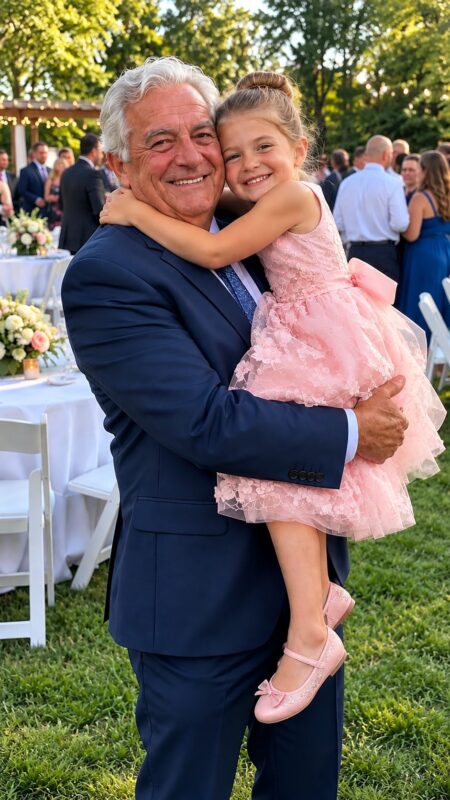
She knew Phoebe mostly through photographs, stories, and the memories Emmett and I shared with her.
After Phoebe died, Emmett and I became closer, working together to give Margot stability and make sure she always knew she was loved.
When Emmett eventually met Claire, I supported him. He deserved happiness, and I hoped Claire would become another person who loved Margot.
Margot was especially excited about the wedding because Emmett had promised she would be included in the family photographs.
But before the ceremony, while searching for her near the bridal suite, I heard Claire say something that stopped me cold.
“You’re not the most important girl in your dad’s life anymore. Stay out of the family photos.”
Moments later, Margot emerged crying quietly and sat staring at the shoes she had been so proud of.
I sat beside her.
“Did I do something wrong?” she whispered.
“No.”
She asked whether Claire becoming Emmett’s wife meant Claire was now more important.
“Your father loves you in a way he loves nobody else,” I told her. “Nobody else can be his daughter. That place belongs only to you.”
Then she asked about the photographs.
“You’re going to be in them,” I promised.
Before the reception, I found the photographer and explained that Margot was Emmett’s daughter and had been promised a place in the family pictures.
The photographer agreed immediately.
Margot appeared in every important photograph. She stood beside Emmett, held his hand, smiled, and laughed when he lifted her into his arms.
Then came the reception.
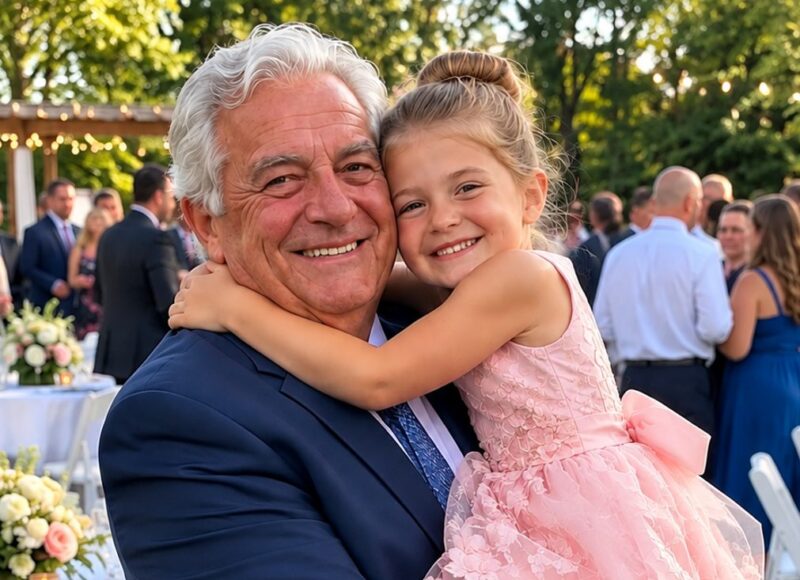
Emmett had asked me weeks earlier to give a toast. I had prepared a warm speech about second chances and new beginnings, but I no longer used it.
When my turn came, I stood and raised my glass.
I spoke about Phoebe, about Emmett being a devoted father, and about a little girl who had already experienced more loss than any five-year-old should.
Then I looked toward Claire.
“Margot deserves to know she belongs.
She deserves to be in her father’s wedding photographs and to enter this new chapter as part of the
family, not something left behind from the chapter before it.”
The room became completely silent.
“She is in the photographs today. I made sure of that.
And I hope she is in every photograph afterward—every Christmas, every birthday, every ordinary Tuesday—right in the center, where she belongs.”
Then I raised my glass to Emmett, Claire, and the family they were building.
Afterward, Emmett found me outside. He hadn’t known what Claire had said.
“Talk to your wife,” I told him. “Tell her what Margot needs and what cannot happen again. But give Claire the opportunity to become better than that moment.”
Later, Claire approached me herself.
She admitted that what she had said was terrible. She had felt insecure because Phoebe remained such
an important presence in Emmett and Margot’s lives, and she had unfairly taken that insecurity out on a child.
“How do I fix it?” she asked.
“Apologize to Margot. Tell her you were wrong. Don’t make excuses.”
Claire promised she would.
Then she surprised me by asking about Phoebe. She wanted to understand the woman who would always be Margot’s mother.
The next morning, Claire apologized exactly as promised. Margot accepted the apology and immediately asked Claire if she wanted to see her shoes.
A year later, Claire sent me a photograph from Margot’s birthday.
Emmett stood on one side, Claire on the other, and Margot was laughing right in the center.
Underneath, Claire had written:
“Our most important girl.”
I printed the photograph and placed it on my refrigerator beside an old picture of Phoebe.
I think my daughter would have understood.
And I know I was relieved.