I Married a Wealthy 74-Year-Old Man to Give My Daughter a Better Life
When Everett Langston proposed to me, I was thirty-six, nearly broke, and raising my ten-year-old daughter, Brielle, alone.
He was seventy-four, wealthy, and had lived by himself since his wife died.
I had cleaned Everett’s house for two years.
After finding me crying over Brielle’s medical bills, he offered an unusual arrangement: marry him and move into his home.
He would cover Brielle’s healthcare, education, and living expenses.
We would have separate bedrooms and no romantic expectations.
After three years, he would give us a townhouse and enough savings to live independently.
Everett wasn’t seeking a traditional wife. He wanted a family.
I initially refused, but when Brielle became ill again, I accepted.
People assumed I had married him for his fortune, yet our agreement was honest from the beginning.
Everett kept every promise. Brielle received proper treatment, grew healthier, and attended a good school. He filled her room with books and taught her chess.
Before long, she called him Grandpa Everett.
Although their bond should have comforted me, my painful past made me suspicious.
Brielle’s father had abandoned us, teaching me never to depend on anyone.
One day, I overheard Brielle ask Everett, “Mom really can’t know?”
“Not yet,” he replied. “You’ll ruin everything.”
They claimed they were making a birthday card, but later I saw Everett secretly give Brielle money.
Their private conversations continued, stopping whenever I entered.

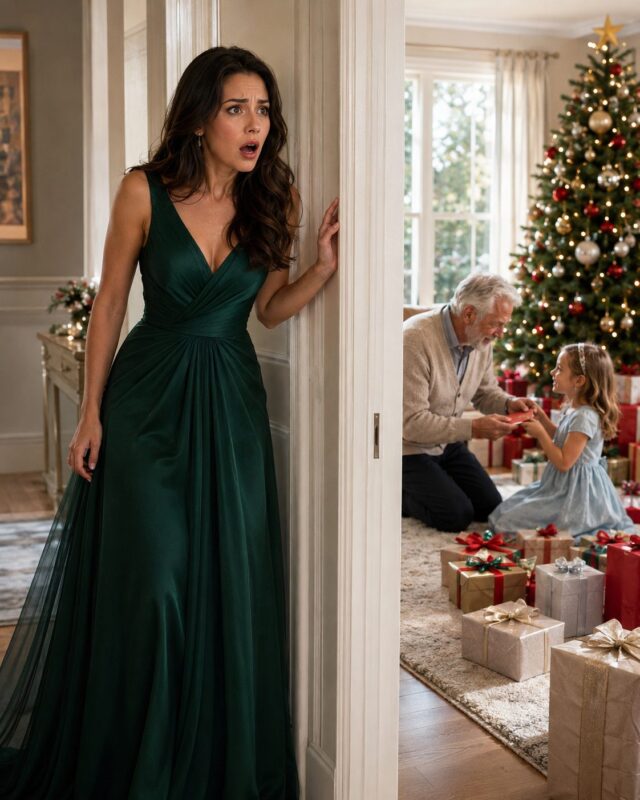
Two nights before Christmas, I woke after midnight and discovered Brielle missing. Hearing voices downstairs, I approached the living room.
“Quickly,” Everett whispered. “We must finish before your mother comes down.”
I pushed open the door—and froze.
Everett and Brielle were sitting beside the Christmas tree, surrounded by ribbons, paper, and poorly wrapped boxes.
The money had been for my Christmas present.
Their secrecy had hidden nothing frightening. Everett was simply helping his granddaughter surprise her mother.
Upstairs, I cried after realizing that disappointment had made me distrust kindness itself.
Afterward, I finally allowed Everett to become family.
Months later, his forty-year-old nephew, Reid, visited. Convinced I was exploiting Everett, he confronted me.
I explained our agreement and reminded him that his uncle could make his own decisions.
During his visit, Reid saw how we cared for one another and apologized.
We began talking regularly, and friendship gradually developed into deeper feelings.
Everett noticed before we admitted it. After recovering from a cardiac emergency, he presented me with a folder containing divorce papers, the promised townhouse, savings, and Brielle’s education fund.
“You fulfilled your agreement when this house became a home,” he said.
I feared I was betraying him, but Everett insisted that gratitude should never cost someone their future.
“I’m changing jobs,” he joked, “from pretend husband to full-time grandfather.”
The divorce was peaceful. Reid never pressured me.
Months later, he proposed, promising not to rescue or control me but to build a life with Brielle and me. I accepted.
We married in Everett’s backyard. He escorted me down the garden path, and Brielle later asked Reid if she could call him Dad.
Our family continued growing.
Everett encouraged me to return to school and pursue my abandoned dream of becoming a teacher.
A year after marrying Reid, I became pregnant with a boy whom we named Everett James.
Years later, on Grandpa Everett’s seventy-eighth birthday, he admitted that he once believed he had rescued Brielle and me.
“I gave them somewhere to live,” he said. “They gave me a reason to come downstairs every morning.”
That night, I called him Dad for the first time.
I had married Everett believing I was sacrificing three years to secure my daughter’s future. Instead, I entered the home where my own future began.
Everett taught me that family is not always defined by blood or marriage.
Sometimes it begins with an unlikely arrangement and grows through ordinary acts of kindness.
Real generosity does not demand ownership, and genuine love helps people become stronger, freer, and brave enough to trust again.