I married my wealthy 72-year-old boss so my little daughter and I would have a place to live. Five years later, he died, and his lawyer told me, “He knew you would fall for it.”
I grew up in foster care, where I learned how painful it was to feel unwanted.
That was also where I met my first husband. We fell in love, married, and eventually had our daughter, Emily.
We were happy until he was diagnosed with cancer.
After a year of treatments, he died, leaving me heartbroken, buried in debt, and raising our one-year-old daughter alone.
Desperate for work, I became a housekeeper for Richard, a wealthy 72-year-old widower. But my salary barely covered our expenses.
When Emily became sick and my landlord gave us a month to leave because I had fallen behind on rent, I realized we could soon be homeless.
Then Richard surprised me.
He admitted he had fallen in love with me and asked me to marry him.
I was 35. He was 72.
I said yes because I saw a lifeline.
But over the next five years, something changed. Richard became family.
He taught Emily chess, stayed awake when she had a fever, and treated us with kindness.
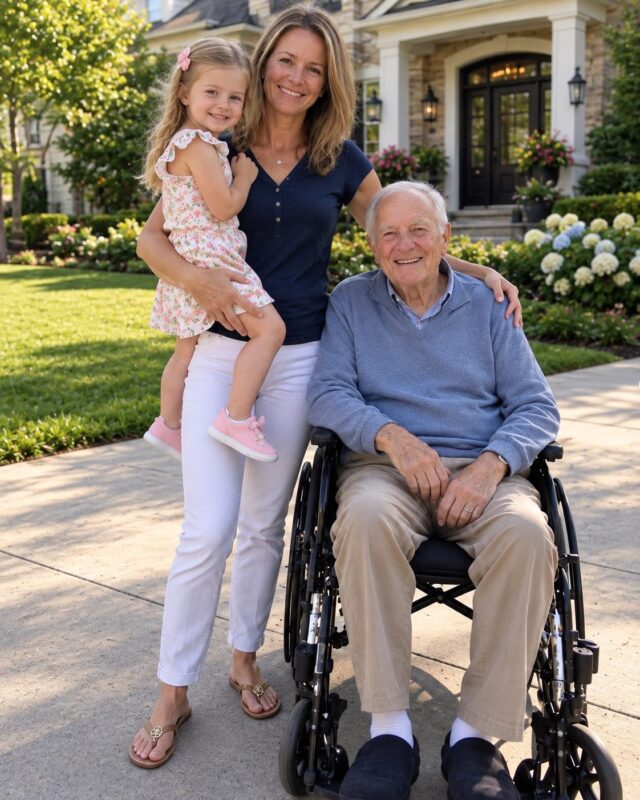
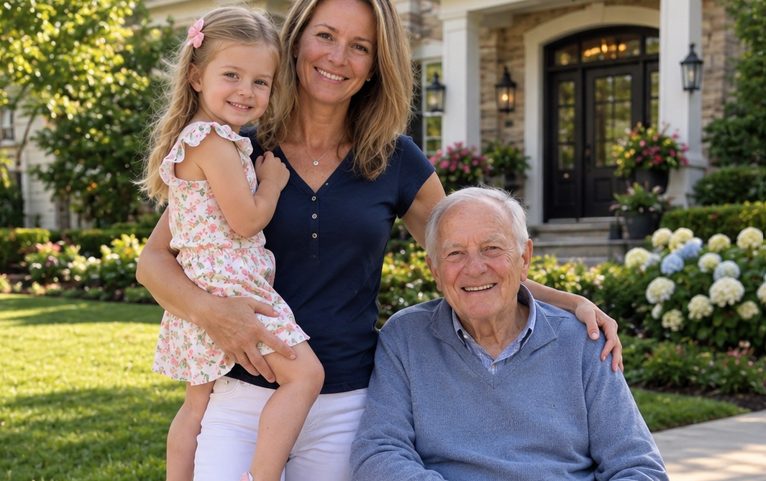
As his health declined, I cared for him. When he eventually needed a wheelchair, I took him outside and made sure he never felt like a burden.
Five years after our wedding, Richard died.
Because he had no relatives, I assumed I would inherit his estate.
Instead, his lawyer arrived after the funeral and said, “Richard knew you’d fall for all of this and marry him. But his will leaves you nothing.”
Then he handed me an envelope.
Inside was a letter from Richard.
He wrote that he had always known why I married him. I needed a home, stability, and safety for Emily. He had never blamed me.
But Richard explained that he had needed something too.
After his first wife died, he had money, investments, and a huge house—but nobody waiting for him at breakfast, reminding him about medication, or laughing when he cheated at chess.
“You needed someone to rescue you,” he wrote. “But the truth is, you and Emily rescued me.”
Richard said he had watched my actions during our marriage. When he became sick, I stayed beside him. When walking became difficult, I slowed down.
When he needed a wheelchair, I never made him feel embarrassed.
One night, he overheard Emily ask whether Richard was her real grandfather.
I had answered, “Family isn’t always the people who share your blood. Sometimes it’s the people who choose to stay.”
Richard wrote that this was the moment he made his decision.
His letter contained an address and four words:
“Go there with Emily.”
His lawyer drove us to a large brick building where children were playing outside.
It was a foster home.
There I learned Richard’s secret.
During the final three years of his life, he had sold or transferred nearly everything he owned into a charitable trust.
His house, investments, and most of his savings would fund housing, education, counseling, and scholarships for children aging out of foster care.
That was why there was almost nothing left in his estate.
Then the lawyer handed me a folder.
Richard had named the organization The Emily & Mom Family Foundation.
He hadn’t left me his fortune.
He had left me control of the foundation.
Richard appointed me chairperson for life because I understood exactly what these children had experienced.
The position also provided a salary large enough that Emily and I would never again have to worry about rent or groceries.
Our home would become temporary housing for young adults leaving foster care with nowhere else to go.
Six months later, we opened the first residence.
Above the entrance was Richard’s final message:
NO CHILD SHOULD EVER WONDER IF SOMEONE WANTS THEM.
On opening day, Emily brought Richard’s old chessboard.
“Can we put this in the common room?” she asked.
“Why?”
“So Grandpa can keep teaching people.”
I hugged her and cried.
Richard hadn’t really left us a mansion or an inheritance.
He had given a frightened mother who grew up without a family and a little girl who had lost her father something money couldn’t buy.
A family.
And he made sure that family would continue growing long after he was gone.
Years later, whenever people asked Emily about Richard, she never mentioned his wealth, his age, or his estate.
She simply said:
“He was my grandpa.”
Richard hadn’t died without relatives after all.
He died surrounded by the family he had chosen—and left behind a way for hundreds of other children to find theirs.