My name is Clara Bennett, and for twelve years I cared for my mother-in-law, Eleanor, as if she were my own mother.
Eleanor had raised four children alone after her husband died.
She spent most of her life working on farms in rural Ohio, struggling to provide food, clothing, and a home for her family.
By the time I married her son Michael, she was already growing weaker.
After several falls and increasing memory problems, Eleanor came to live with us.
What was supposed to be temporary became twelve years. While Michael worked long hours and traveled,
I raised our son Noah, managed the house, and cared for Eleanor.
I prepared her meals, organized her medication, helped her bathe and dress, brushed her hair, and fed her when her hands shook too badly to hold a spoon.
At night, I often checked that she was still breathing.
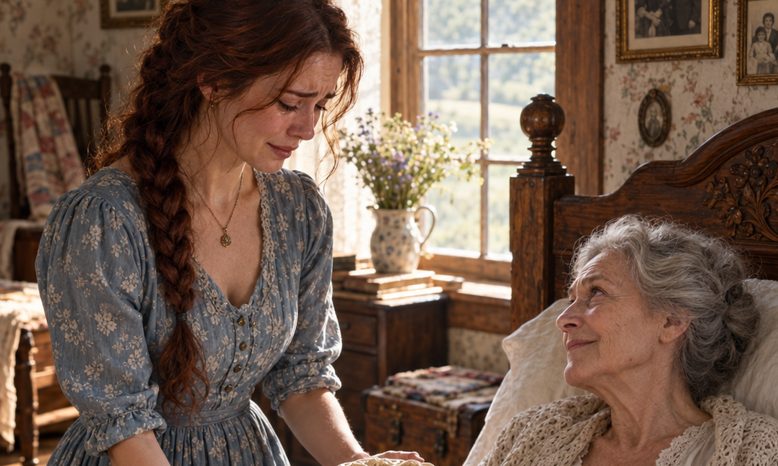
Sometimes she woke confused and called for her late husband. I would sit beside her, hold her hand, and remind her that she was not alone.
Eleanor’s other children visited occasionally, usually bringing flowers or fruit.
They praised my patience but rarely stayed long enough to understand how much care she required.
Everyone believed Eleanor had nothing.
She had no pension, valuable house, or large savings account. The family farm had been sold years earlier, so nobody expected an inheritance.
That never mattered to me. I was caring for a person, not a bank account.
During Eleanor’s final winter, she became very weak. I repeatedly asked her children to visit, but they were always busy.
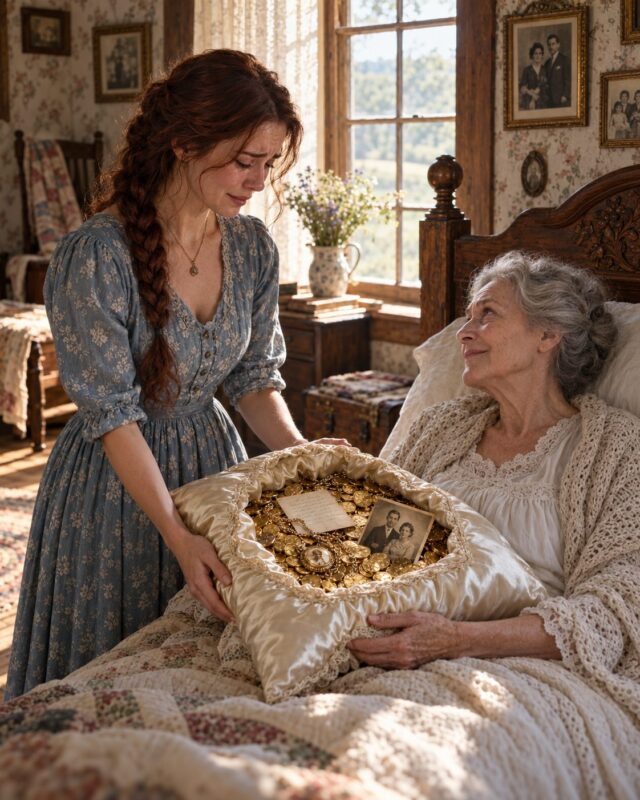
One night, as I sat beside her bed, she pointed toward an old, torn pillow she had owned for years.
“It’s for you, Clara,” she whispered.
Then she quietly passed away.
The next day, while the family cleared her room, Richard, Michael’s older brother, picked up the pillow and suggested throwing it away.
I immediately stopped him. It was the last thing Eleanor had given me, so I kept it.
That night, I noticed one side felt unusually heavy. Reaching through the torn seam, I discovered a faded velvet pouch hidden inside. It contained a brass key and a letter addressed to me.
In the letter, Eleanor revealed a secret.
Long before her marriage, her grandfather had purchased forty acres near what later became a major highway bypass outside Columbus.
Once considered worthless, the land had become extremely valuable.
The key opened a safety deposit box containing the original documents for a trust Eleanor had created years earlier.
She had named me as its beneficiary.
Eleanor explained that her children had assumed she had nothing and gradually stopped giving her their time.
I had remained without expecting any reward.
She remembered every meal, every sleepless night, every time I brushed her hair, held her hand, or assured her she was not a burden.
“You gave me dignity when I had nothing left to offer,” she wrote. “I want this land to give you security.”
The following morning, I told the family.
Michael’s siblings were furious and accused me of influencing her. They threatened to contest the trust.
I finally reminded them that Eleanor had been their mother while she was alive, not merely an estate after her death.
Michael defended me, saying he had watched me devote twelve years to her without knowing the land existed.
The legal dispute lasted months, but Eleanor had prepared carefully.
Her attorney had documented several meetings and recorded statements proving she understood her decision.
The challenge failed, and the land—worth almost two million dollars—became mine.
We paid off our mortgage, created a college fund for Noah, and secured our future.
I also established the Eleanor Bennett Care Fund, which provides respite care, groceries, transportation, and companionship for elderly people living alone.
I repaired Eleanor’s pillow and placed it in a wooden chest with her letter.
Her greatest gift was not the land or the money. It was knowing she had noticed every quiet act of care.
Eleanor entered my life as my husband’s mother and left it as mine. She taught me that real love is not expressed through occasional flowers or impressive words.
Love is staying when no one is watching, expecting nothing in return.
Kindness is never truly wasted. Someone always remembers.