The Bride Who Walked Down the Aisle Without Fear
The diamond tiara felt heavier than I expected—not because of its stones, but because of what it represented.
For years, I believed beautiful things belonged to women like my sister Chloe:
women with perfect hair, smiles, and photographs.
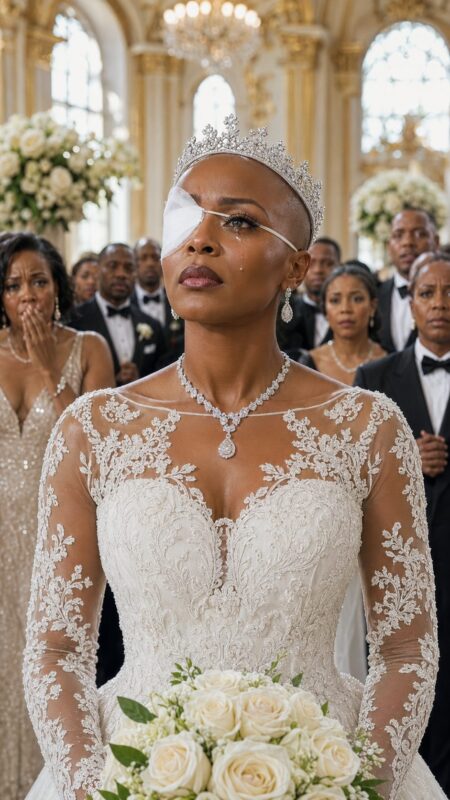
But after surviving eighteen months of chemotherapy, I finally understood that I didn’t need a wig to prove I was beautiful.
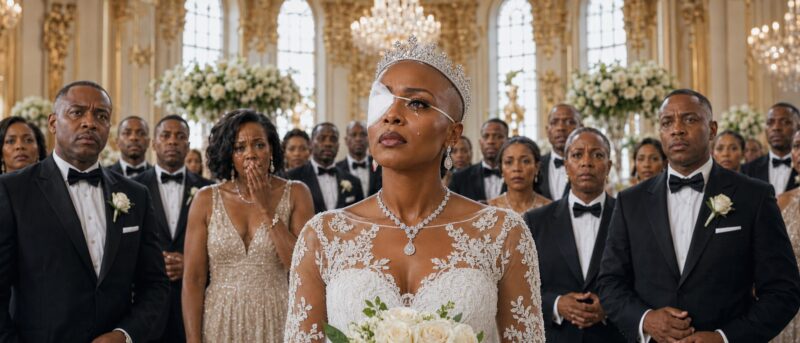
As I entered the cathedral with my head uncovered, Liam stood and addressed our five hundred guests.
“My bride was never supposed to wear a wig today,” he said.
“She was supposed to wear whatever made her feel powerful.
Anyone who believes surviving cancer makes her less beautiful is welcome to leave.”
No one moved.
Instead, an elderly woman stood and removed the scarf covering her head.
“I finished chemotherapy three weeks ago,” she said. “You look magnificent.”
Others rose after her—survivors, patients, nurses, and families I had met during treatment.
Liam had secretly invited them. He had also discovered the anonymous online support group where I encouraged frightened patients.
“You told strangers they didn’t need to feel ashamed,” he said. “Today, believe your own words.”
Suddenly, Chloe stood.
“This is ridiculous,” she snapped. “She makes everything about her illness.”
My father ordered her to sit down, but then Liam’s brother Noah entered carrying my wig in a clear bag.
“I found this in Chloe’s car,” he announced. “The parking camera recorded her putting it there before the ceremony.”
Chloe finally confessed. After I became sick, she felt forgotten.
I had become “the brave one,” and then I met Liam and received the life she believed should have been hers.
“I survived something terrible,” I told her. “That isn’t the same as taking something from you.”
I allowed her to remain for the ceremony, but warned that she could not return to my life until she accepted responsibility.
When my mother reminded me that Chloe was my sister, I answered, “And I’m your daughter.”
Chloe left alone.
Then Liam offered me his hand. I looked once at the wig and turned away.
“Now I’m ready.”
At the altar, Liam’s grandmother Eleanor touched the $2 million tiara. Her mother had worn it after surviving a war.
“Our family called this a symbol of wealth,” Eleanor said. “But it was always a symbol of endurance. That is why it belongs with you.”
After our vows, Liam led everyone into the garden, where an auction stage had been prepared.
The oncology wing where I received treatment was in danger of losing its financial-assistance program.
Liam revealed that I had quietly helped patients afford transportation, childcare, medicine, and meals.
Our wedding gifts had already been donated, but Eleanor wanted to do more.
She removed the tiara from my head and placed it inside an auction case.
“A symbol has no value if it cannot change a life,” she declared.
Bidding began at one million dollars and climbed rapidly. Finally, a woman offered $8.4 million.
The winning bidder was Grace, a former treatment companion who had once struggled with medical bills.
Her husband had recently sold his company.
Grace bought the tiara to save the hospital program—but then placed it back on my head.
“You helped me believe I still had a future,” she said. “You saved me long before this tiara saved anyone.”
Six months later, the hospital opened a fund that supported hundreds of families.
A wedding photograph of me wearing the tiara hung at its entrance beneath the words:
“Beauty is not what remains untouched. Beauty is what survives—and still chooses kindness.”
Nearly a year later, Chloe wrote to me.
She admitted that she had believed another woman’s happiness diminished her own.
She had begun therapy and started working for a nonprofit supporting families affected by serious illness.
“I hid your wig because I wanted everyone to see what you had lost,” she wrote. “Instead, you showed everyone what you had gained.”
I did not forgive her immediately, but eventually agreed to meet. When she apologized without excuses, I believed her.
My wedding became unforgettable not because I walked down the aisle without a wig, but because I finally stopped hiding my voice, my boundaries, and my strength.
Chloe tried to expose my weakness. Instead, she revealed the woman I had fought so hard to become.