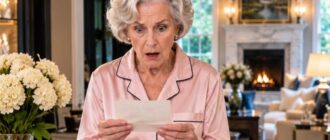
Five minutes before Elena Sterling was due to walk down the aisle at Seattle’s Glasshouse, her phone buzzed inside her bouquet. The message was from her mother, Vivian:
“We’re skipping your mistake.”
A photograph followed in the family group chat. Elena’s parents, brother Julian, and several relatives were celebrating on a private beach in Maui. Across the image were the words: “True Family Only.”

They had deliberately boycotted her wedding to David, hoping to humiliate her. Yet Elena did not cry or demand an explanation. An unexpected calm settled over her. She typed a single reply:
“Check your bank apps.”
Then she switched off her phone and entered the conservatory.
Six rows reserved for the Sterling family stood empty. Guests whispered, but Elena continued toward David. When he quietly asked what had happened, she told him they had gone to Maui.
“Everyone who matters is already here,” she said.
During his vows, David abandoned his prepared speech and made Elena a different promise: “I will never make you beg for a seat in your own family.”
Meanwhile, in Maui, every Sterling credit card was being declined.
Their banking access had been suspended pending a forensic investigation. By the time Elena signed her marriage certificate, forty-seven messages were waiting for her.
Her family believed she had no authority to freeze their money. They were wrong.
Elena’s grandmother, Eleanor Sterling, had transformed a neighborhood hardware store into an eighty-million-dollar company.
Although Elena’s father became CEO, Eleanor placed the company’s shares, properties, and investments in a trust.
The family could spend its income, but major transactions required approval from the trustee.
Unknown to everyone else, that trustee was Elena.

Four months before the wedding, an accountant had alerted her to suspicious transfers from the employees’ pension reserve into businesses connected to Julian.
A forensic audit revealed that $3.7 million had disappeared over four years.
Julian had used the money to cover failed investments, personal debts, and luxury property.
Vivian had approved several expenses, while Elena’s father signed reports without examining them.
On the wedding morning, Julian requested another $600,000 for supposed international business development. The request originated in Maui.
Their vacation was about to be funded with stolen pension money.
Elena had not destroyed their holiday. She had protected the employees paying for it.
During the reception, her parents and Julian suddenly arrived, still wearing resort clothes. Vivian accused Elena of humiliating them.
Before Elena could respond, her attorney, the forensic accountant, and longtime payroll employee Maria Torres entered carrying evidence.
The board had removed Elena’s father as CEO pending investigation. Julian had been dismissed, and Vivian had lost access to the trust’s assets.
Julian had also forged his father’s electronic signature eleven times.
Maria then read a letter Eleanor had left for Elena. It instructed her to protect the workers first, the company second, and only those relatives willing to tell the truth.
“And on the day you finally choose yourself,” the letter concluded, “I hope you are surrounded by the family you built—not merely the one whose name you inherited.”
Nearly two hundred wedding guests rose in support of Elena.
Her father admitted he should have attended the wedding and agreed to cooperate with investigators. Vivian refused to accept responsibility, while Julian left in silence.
Six months later, the stolen pension money was restored through the sale of properties purchased with company funds. Maria became interim CEO, and Elena established a scholarship program for employees’ children.
On Elena and David’s first anniversary, they received a wedding photograph captioned: “True family shows up.”
Behind it was an older picture of Eleanor outside her original hardware store. Beside her stood a younger Maria—and between them was Elena.
Maria was Elena’s biological mother. Widowed and financially struggling, she had allowed the Sterlings to adopt Elena, believing they could provide a safer life.
Eleanor had secretly kept Maria close enough to watch her daughter grow.
The Sterlings had rejected Elena not because she was unworthy, but because they feared the truth about her identity and authority.
Elena crossed the room toward Maria and held out her hand.
“Would you like to have dinner with your daughter?”
Maria tearfully accepted. When David took their photograph, there were no empty chairs—only people who had chosen to stay.
What truly makes someone family: blood, a shared name, or showing up when it matters most?