“Pay your way or get out!”
Those were the words Derek Vance hurled at me while I sat in a gynecologist’s office recovering from a medical procedure.
I was twenty-three years old, exhausted, frightened, and trying to heal. Yet for the first time in years, I refused to give in.
“No.”
One word.
That single answer changed the course of my life.
Derek, my stepbrother, had spent years controlling me.
He dictated how I spent my money, monitored where I went, took things that belonged to me, and constantly reminded me that because I lived in what he considered his house, I owed him.
Whenever I pushed back, he relied on intimidation to get his way.
This time, however, I stood my ground.
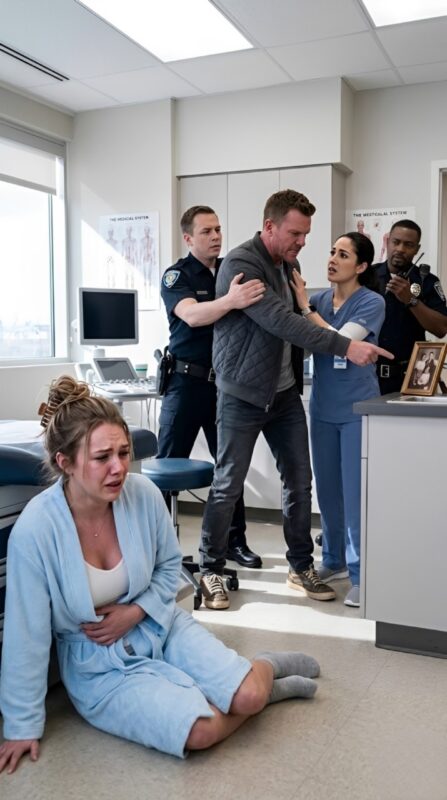
The moment I refused, anger flashed across his face. Dr. Amelia Rhodes immediately stepped between us and ordered him to leave the room.
He refused.
Before I could react, he lashed out.
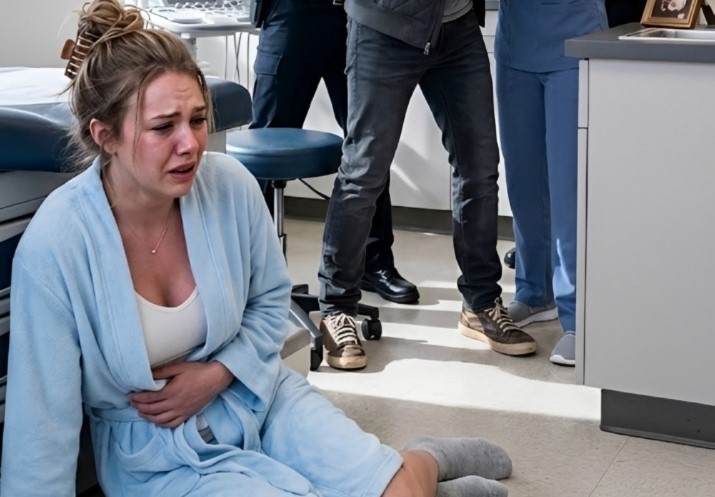
I fell to the clinic floor, pain spreading through my side and abdomen. As I struggled to recover, Derek continued shouting accusations, insisting that I was dishonest and manipulative.
But this wasn’t our house.
This was a medical facility filled with witnesses.
Dr. Rhodes immediately called security and contacted emergency services.
Within minutes, nurses and security personnel arrived. Soon afterward, Officers Grant Miller and Elena Ruiz entered the room. The moment they saw me injured on the floor, their demeanor changed.
“Keep your hands where I can see them,” Officer Miller instructed Derek.
For the first time in years, I saw uncertainty in his eyes.
Even then, he tried to convince everyone that I was exaggerating. But the evidence spoke for itself. Dr. Rhodes had documented my injuries. Multiple staff members had witnessed his behavior.
Derek was placed in handcuffs and escorted out.
As he left, he looked directly at me.
“You’re dead to Mom after this,” he said.
The words hurt, but something had already shifted.
People finally saw the truth.
At the hospital, doctors confirmed that although my ribs were severely bruised, nothing was broken. They treated my injuries and introduced me to a victim advocate named Hannah Brooks.
For the first time, someone listened without judgment.
I explained years of control and fear. Derek had taken portions of my earnings, monitored my movements, damaged my belongings, and used intimidation to keep me compliant.
My mother, Linda, knew enough to recognize what was happening, but she rarely stepped in.
With Hannah’s guidance and Officer Ruiz’s support, I applied for an emergency protection order. Medical records, photographs, witness statements, and Dr. Rhodes’s report became part of the evidence.
Then my mother called.
Instead of asking how I was feeling, she asked, “What happened?”
When I explained that Derek had assaulted me, she defended him and urged me to return home and make peace.
For years, I would have apologized.
This time, I didn’t.
“I’m not coming back,” I told her.
That evening, I moved into a confidential shelter. It wasn’t luxurious, but it gave me something I hadn’t experienced in a very long time:
Safety.
My room had a lock. No one shouted at me. No one monitored my every move.
The following day, a temporary protection order was granted.
At Derek’s court hearing, prosecutors presented witness statements, medical records, and documentation of previous incidents at our home.
The judge imposed strict no-contact conditions and prohibited Derek from being present when I returned to collect my belongings.
Several weeks later, accompanied by police officers, I went back to the house.
My mother accused me of bringing law enforcement into her home.
“I brought them to protect me,” I replied.
As I packed my things, she insisted that Derek was family.
“So am I,” I said quietly.
The legal proceedings continued for months. Derek’s attorney attempted to characterize everything as a simple family conflict, but the evidence told a different story.
Dr. Rhodes testified.
The nurses testified.
Security footage supported my account.
When it was finally my turn to speak, my hands trembled, but I refused to stay silent.
I described years of fear, manipulation, and control. I explained what it felt like to believe my voice didn’t matter.
In the end, Derek accepted responsibility for reduced charges that included assault and coercive behavior. He received probation, mandatory counseling, financial penalties, and a long-term protection order.
It wasn’t a dramatic ending.
He never offered a sincere apology.
But the truth was finally documented.
I eventually moved into a small apartment above a bakery in Westerville. It was tiny, imperfect, and absolutely mine.
Every bill.
Every key.
Every decision.
They all belonged to me.
Little by little, I rebuilt my life. Therapy helped. Friends helped. Even Dr. Rhodes and Nurse Callie occasionally sent messages of encouragement.
A year later, I returned to the same clinic for a routine appointment.
Standing in the lobby, memories came flooding back.
The confrontation.
The fear.
The years spent feeling powerless.
But this visit was different.
There were no threats.
No arguments.
No police officers.
Just an ordinary appointment on an ordinary day.
As I walked back to my car afterward, I realized something important.
The past would always be part of my story.
But it no longer controlled my future.
For the first time in my life, I was free to choose my own path.
And that freedom was worth more than anything I had ever lost.