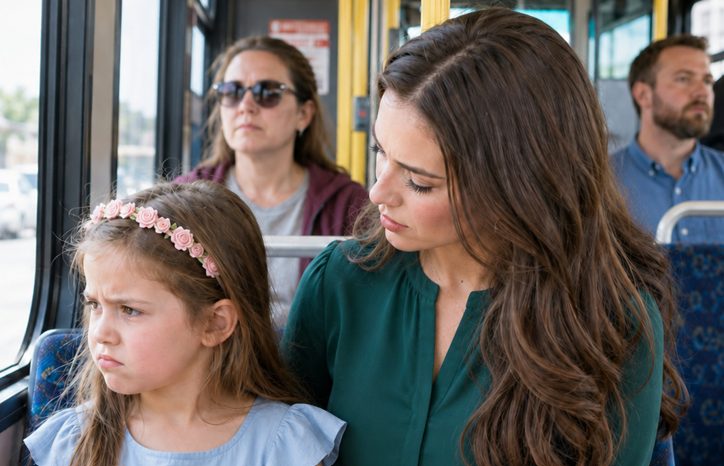
We were riding home from my mother’s house when my eight-year-old daughter, Abigail, refused to leave the bus at our stop.
“Please don’t make me get off,” she whispered. “Gregory is at home, and I’m scared of him.”
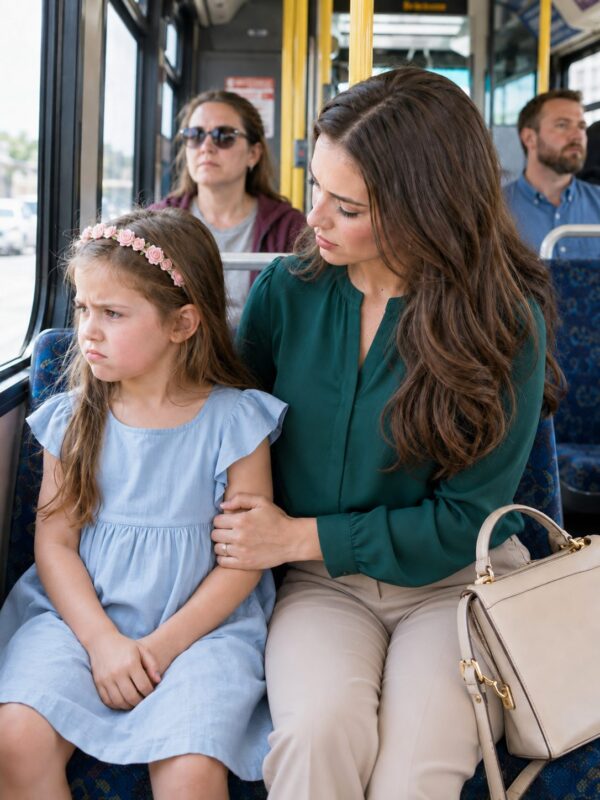
Abigail wasn’t throwing a tantrum. Her face was pale, and she clutched her backpack tightly. Trusting her fear, I asked the driver to continue.
Once we were several blocks away, Abigail explained that she had awakened during the night and found Gregory standing beside her closet, speaking on the phone.
“He said they could take me later, but first he needed your signature,” she told me.
“He also said the apartment was clear because I’m registered at Grandma’s house.”
Her words brought back Gregory’s questions about my apartment, my divorce, Abigail’s official address, and whether anyone else held power of attorney.
I had assumed he was simply interested in our lives.
Then Gregory called.
“Don’t lie to me,” he said. “I watched the bus pass. Come back, and don’t let a child make decisions for adults.”
I ended the call and took Abigail to a crowded shopping center.
My mother told me not to return home and urged me to call Christopher, Abigail’s father.
Gregory had repeatedly warned me that Christopher wanted full custody, but when he arrived, he merely hugged Abigail and assured her she had done the right thing.
I suddenly remembered that my passport, the apartment deed, and Abigail’s birth certificate were at home.
Moments later, Gregory sent me a photograph of those documents beside a purchase agreement.
“Come home and sign it,” his message said.
Abigail then opened her backpack and produced an unfamiliar phone she had found hidden behind boxes in her closet.
Notifications appeared on its locked screen.
“Buyer is ready. Get Alison’s signature tonight.”
Another mentioned using my medical records if I refused. Six weeks earlier, Gregory had watched me complete forms at an urgent-care clinic.
Now I realized he had been studying my signature.
Police searched the apartment, but Gregory had disappeared with my original documents.
He had left the contract behind, however. It named Lakefront Residential Holdings as the buyer—a company created four months earlier and registered under Gregory’s deceased stepfather.
Gregory intended to transfer my apartment into a company he controlled.
Attached was a forged authorization claiming that migraines made me incapable of managing my finances.
The bus driver, Marcus Reed, provided another vital clue.
Exterior camera footage showed Gregory waiting at our stop beside a silver sedan. Marcus had written down its license plate after it followed the bus.
The car belonged to Elaine Mercer, the notary whose seal appeared on the forged paperwork.
That night, Gregory accidentally sent me a recorded conversation.
In it, he instructed someone to make Elaine leave town and added, “This worked with the woman in Madison.
It will work again.”
Investigators reopened that woman’s property-fraud case and connected Gregory to four other victims.
All were divorced or widowed homeowners whom he had approached romantically before obtaining their personal documents.
Three days later, police arrested Gregory outside Chicago.
His phone contained information about twelve families.
I was number eleven, and another woman was supposed to be next.
Investigators also discovered what Gregory meant by “take the girl.”
He planned to submit a false complaint claiming I was medically unstable.
While Abigail temporarily stayed with Christopher or my mother, he intended to pressure me into transferring the apartment.
Months later, Gregory and two associates admitted their roles in the scheme.
Elaine cooperated with investigators, helping several women recover their homes. I placed my apartment into a protected family trust.
One year after Abigail’s warning, we rode the same bus home. This time, she confidently pulled the cord.
Waiting at our stop were my mother and Christopher.
Together, we opened an advocacy center beneath my apartment for families facing identity theft, housing fraud, and coercive control. We called it The Next Stop.
On its wall hung a message from the woman Gregory had planned to target after me:
“Because one little girl spoke, he never reached our door.”