My sixteen-year-old daughter, Lily, worked nearly every day that summer and saved $4,086 for her first used car.
On the morning we planned to buy it, however, she entered the kitchen without her purse and quietly admitted that every dollar was gone.
“I gave it away,” she said.
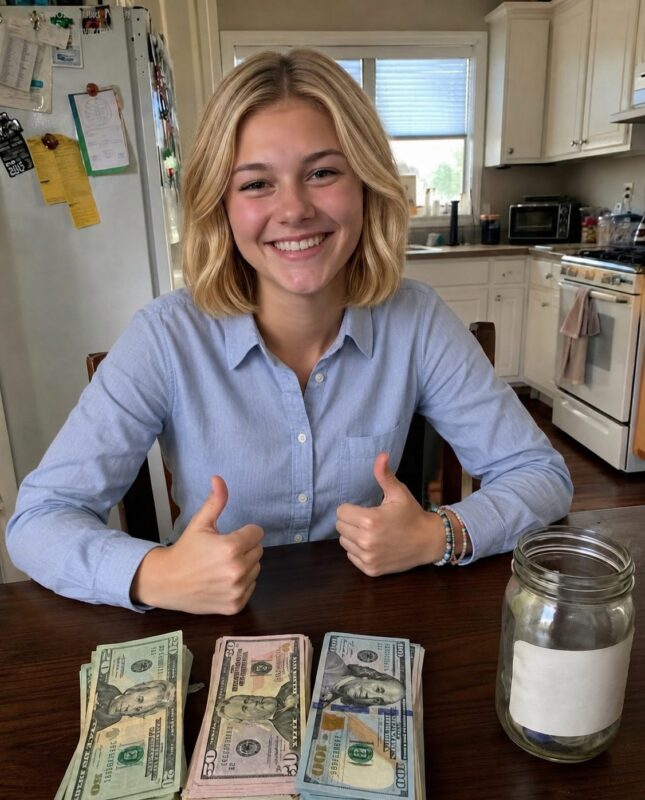
I struggled to remain calm. Lily had sacrificed outings with friends, worked exhausting shifts at a café, and saved almost everything she earned.
A car meant independence, but it also represented a milestone her father, Michael, would never witness. He had died four years earlier.
“Who received the money?” I asked.
“Seventeen people.”
Instead of explaining, Lily asked me to accompany her to the café. When we arrived, the owner, Mrs. Patel, seemed to know exactly why we were there.
She led us into her office and removed an old index card from a cabinet.
Sixteen names were written on the front in Michael’s handwriting.
Mrs. Patel explained that Michael had once noticed a man named George washing his face in the café restroom before a job interview.
George had been sleeping in his car. Michael bought him breakfast, found him a clean shirt, and paid for his bus ride.
George got the job, but his first paycheck would not arrive until Friday.
Without money for transportation, laundry, or food, he risked losing the opportunity before he had even started.
Michael covered those small expenses.
Afterward, he began noticing similar situations everywhere.
One woman had secured a restaurant job but couldn’t afford the required nonslip shoes.
A young father needed temporary childcare before receiving his first paycheck.

Someone else needed phone service so an employer could contact him.
Michael did not try to solve every problem.
He simply provided enough help to carry people across the gap between receiving an opportunity and becoming financially stable.
He called it “getting somebody to Friday.”
Mrs. Patel kept track of the people he helped.
There were sixteen names on her card.
Every few months, Michael would visit and ask how many “Fridays” they had reached.
I had been married to him for fourteen years, yet I had never known about any of it.
Then I turned the card over. On the back, in Lily’s handwriting, were the numbers one through seventeen.
During the summer, she had quietly continued her father’s work.
Mrs. Patel drove us to an auto-repair shop, where we met Tara, a nineteen-year-old apprentice.
Tara’s shift began at six each morning, but public transportation from her temporary accommodation did not run early enough.
Without help, she would have lost the apprenticeship before receiving her first paycheck.
Lily had spent more than $1,100 on Tara’s work boots, a used bicycle, and a short-term room near the shop.
The remaining money had helped sixteen others pay for bus passes, work clothes, meals, and phone service.
When Tara promised to repay her, Lily shook her head.
“Help somebody else get to Friday.”
On our way home, I asked Lily why she had hidden everything from me.
“Because you would have helped,” she replied. “I needed to know if I could do it myself.”
Then she explained the real reason.
“Dad can’t do it anymore. I wanted to know whether I could do one thing he would recognize.”
Her generosity moved me, but I also reminded her that secretly giving away four thousand dollars was not a responsible habit.
I would keep the three thousand dollars I had promised toward her car, but she would need to earn her share again.
That evening, Lily returned to searching through used-car listings.
Michael’s old keychain rested beside her phone. Its metal tag carried one word: HOME.
“Any regrets?” I asked.
“I regret that cars cost four thousand dollars,” she joked.
Then she looked at a photograph of the index card—Michael’s sixteen names on the front and her seventeen on the back.
“But I don’t regret seventeen.”
She picked up the empty keychain and turned it in her fingers before continuing her search.
The key ring would remain empty for now, but Lily had inherited something far more valuable than a car.