My daughter filled three shopping carts with expensive groceries, and when the cashier announced the $980 total, she ordered me to pay.
“It’s the least you can do for living with us.”
My name is Margaret, and I am seventy-two.
My pension was only $1,200 a month, and I needed the remaining money for medication.
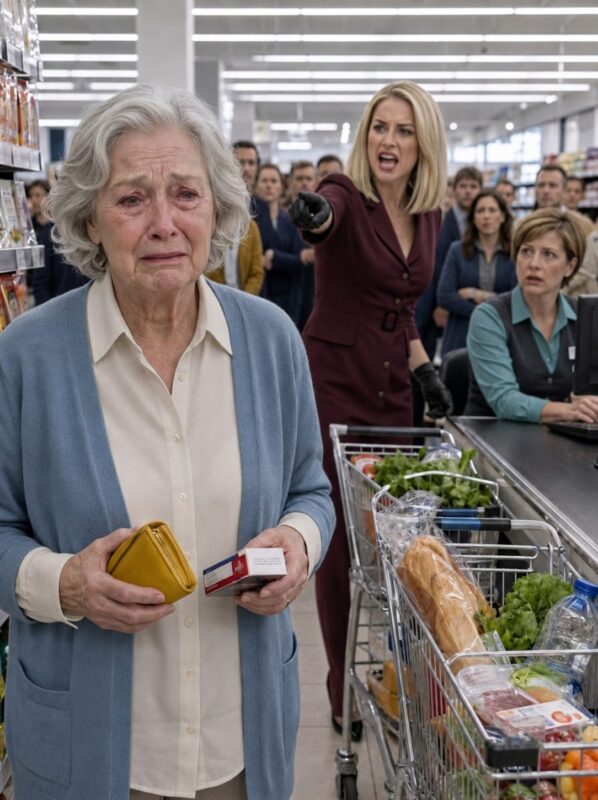
Yet my daughter, Stephanie, and her husband, Clinton, expected me to finance a dinner for his company executives.
Four years earlier, after my husband Donald died, Stephanie convinced me to sell my home and move in with them.
I transferred $250,000 from the sale so they could build me a comfortable ground-floor room.
Instead, I ended up sleeping beside storage boxes in a damp basement.
Gradually, I also became their unpaid cook, cleaner, babysitter, driver, and dog walker.
I paid for groceries, electricity, internet, and streaming services while they insisted I lived with them “rent-free.”
At the supermarket, something inside me finally changed.
“That house was partly paid for with my money,” I reminded Stephanie.
“You gave us that money voluntarily,” she snapped. “Stop acting like a victim and take out your card.”
I closed my wallet.
“No.”
Then I walked away, leaving Stephanie stranded with three carts and no way to pay.
When she shouted that I should never return, I stepped through the supermarket doors without looking back.
I took a bus to my longtime friend Clara’s house. After hearing everything, she welcomed me into her guest room.
The next morning, I remembered that several household bills were still automatically charged to my bank account.
Clara accompanied me to the bank and utility offices, where I canceled every payment registered in my name.
Soon afterward, Stephanie and Clinton arrived at Clara’s gate.
Clinton was furious because the internet had been disconnected during an important business call.
“You’re going to restore everything immediately!” he demanded.
“No,” I answered.
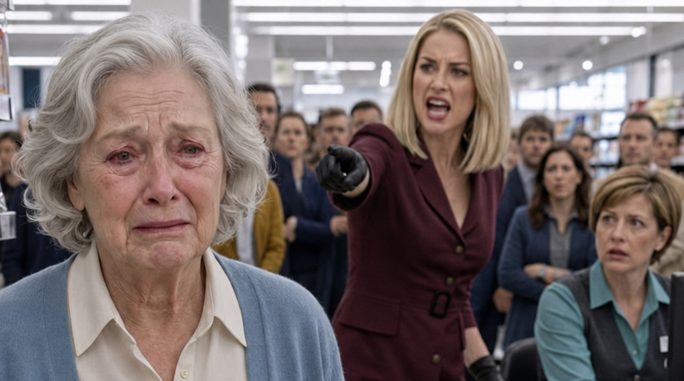
Desperate, Stephanie suddenly revealed that Clinton had not used most of my house money for my room.
Only about $40,000 had gone toward construction.
The remaining $210,000 had funded their kitchen renovation, SUV, vacations, debts, shopping trips, and luxurious lifestyle.
When the money disappeared, they began using my pension to keep everything running.
Stephanie apologized, but Clinton cared only about reconnecting the utilities. That confirmed I could never return.
I told Stephanie I still wanted a relationship with my grandson, Mason, but I would meet him only in a neutral place.
Then I made my decision final: I would never live in their house again.
Without my money and unpaid labor, their lifestyle quickly collapsed.
Reconnecting the utilities cost them hundreds in fees and deposits.
Clinton missed an important presentation and lost his bonus. Their credit cards were already at their limits, and their mortgage became impossible to manage.
Stephanie tried hiring someone to perform all my former duties, but one worker quit and another demanded a salary they could not afford.
They finally understood that my “little bit of help” had actually been a full-time job.
Weeks later, Stephanie brought Mason to meet me at the park.
He ran into my arms, delighted to see me. Before leaving, Stephanie handed me $500 and promised to repay me gradually.
She had found a job and sold several luxury possessions.
I accepted the money, although forgiveness would take time.
Eventually, Stephanie and Clinton put their house up for sale.
Meanwhile, I found an affordable studio behind the home of a kind widow.
It had a bedroom, a kitchenette, a clean bathroom, and a window overlooking flowers.
My pension covered the rent, medication, groceries, and small pleasures like yarn for knitting.
For the first time in years, I slept peacefully. My health improved, and I began enjoying morning walks and quiet cups of chamomile tea.
I had once believed loving my daughter meant sacrificing everything.
Now I understood that helping her had never been my mistake.
My mistake was allowing love to become emotional blackmail.
A mother can love her family without surrendering her dignity.
Sometimes the most important door we open is the one we finally learn to close.